
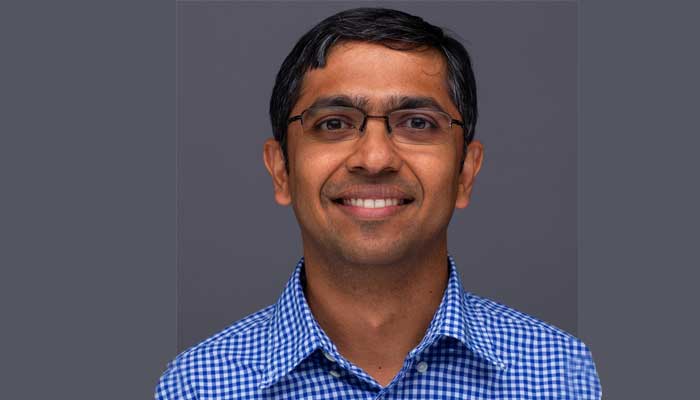
Manish Jain’s Ph.D in game-theoretic research on large-scale optimization in adversarial settings was first successfully deployed in LAX and used by air marshals at TSA, resulting in a slew of awards and commendations. The former startup founder, now at Google DeepMind, talks about the enriching IIIT Hyderabad ecosystem, fulfilling projects and alumni who paved the way for his accomplishments.
Manish Jain’s startup idea reminds you of the fiendish Hans Gruber and his mischief-makers, who take over an international airport’s traffic control system in Die Hard 2; a golden ticket plot that caught the imagination of Hollywood buffs. The IIITH alum’s Ph.D from the Department of Computer Science at the University of Southern California (2013), was an extension of Prof. Praveen Paruchuri’s work in the field that translated into Armorway, his California-based start-up venture. Procore Technologies’ acquisition of Avata Intelligence (formerly Armorway Inc.) would see Manish taking a calculated risk to return to India in 2022, to pursue his vision of using applied AI, Data Science, and Cloud platforms for social good.
“IIITH trains you to stay in touch with the latest in the field and this academic rigor helps one adapt easily to other settings,” notes Manish who began working on mathematical optimization during his doctoral tenure, that changed into multi-agent systems and pivoted to question-answering systems for the Pharma industry during the startup acquisition. Presently at Google DeepMind, he works on large language models, with a focus on Indic languages.
Forged by IIITH’s robust tech ecosystem
It was the insistence of his uncle, an IIT Bombay professor that brought Manish to IIIT Hyderabad for his B.Tech in Computer science with electronics. “Like any student who joins a premier institute, I started with an imposter syndrome, that eased into a sense of relief when we settled down”. Being the first fresher to join campus, Manish was treated to some good natured leg pulling, which in hindsight forged deep friendships.
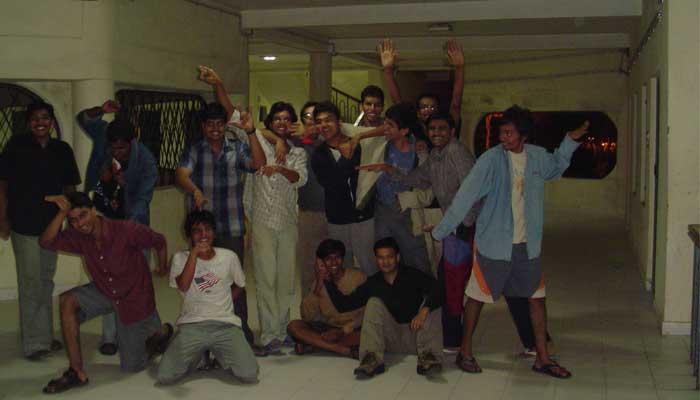
Learning and networking opportunities presented themselves to the go-getter who was Techfest coordinator for Felicity, Placement committee representative for his batch and worked on setting up the digital library and Wi-Fi connectivity for the entire campus. “It was nerdy but fun.” The fiasco of getting a C for a robotics project, in spite of successfully building a wall climbing robot, that broke into pieces during testing, remains a favorite memory.
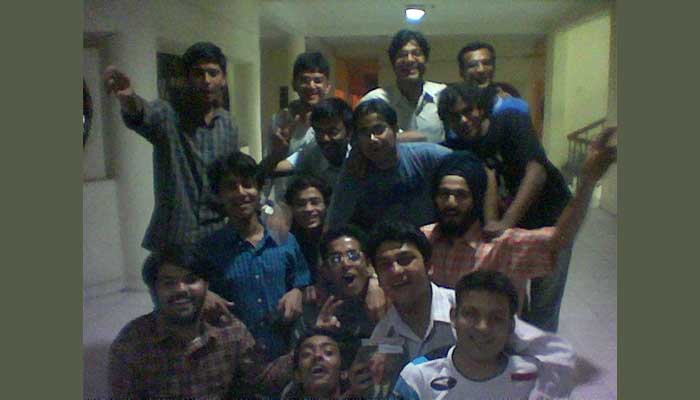
“Our day’s schedule would begin at 6 AM with the mandated PE or Jeevan Vidya, and the evenings were sports practise – basketball, football and volleyball, TA sessions, video games and then winding down at the canteen”. He coasted through as a “reasonably good student” with deep regard for a stellar faculty that included Prof. Govindarajulu, Director Prof Rajiv Sangal, Prof Kaul, Prof Prasanjit Gupta, Prof Jawahar and Prof Kannan. Along with partnering with his B.Tech. (Hons) Advisor Prof Kamal Karlapalem in multiple projects, Manish did an internship at Pramati Technologies.
When IIITH co-hosted IJCAI, Manish connected with alumni like Prof Pradeep and benefited from the old school ecosystem that exists in the West. While he secured a placement at Adobe Technologies at the on-campus recruitment cycle, thanks to Prof Kamal’s recommendation, a meeting with Prof Milind Tambe would become his pathway to a Ph.D at the University of Southern California.
Prof Sinha’s electives on Linear programming, advanced programming and operations research and Prof Kamal’s multi-agent systems elective would inspire Manish’s Ph.D research in multi-agent systems with focus on linear optimization.
Ph.D. and a nicely shaping career graph
“At USC (2007-2013), while my peer group were a mixed batch of brilliant international students, I realized pretty quickly that I could hold my own because my IIITH training was pretty rigorous, with a strong coding culture. A few Masters’ networking and algorithm courses required heavy coding and I had an edge there”.
In 2012, at the cusp of wrapping up his thesis, Manish co-founded a startup, whose rationale is best explained by the Rock-Paper-Scissors analogy; where outcomes cannot be forecasted since players’ hands are revealed simultaneously. In an airport setting, continuous surveillance by police officers, canines or cameras can be foiled by a deliberate act by adversaries who have surveilled the system to exploit weaknesses. How can the defenders come up with strategies using advanced mathematics?
“Our work was an extension of Prof. Praveen Paruchuri’s core work that we co-authored in 2007”, observes Manish who has over 200 publications, contributed chapters to three books and articles in AI journals. Their first software was deployed at LAX, Pittsburgh and other airports after thorough governmental data-driven scrutiny and internal testing by Department of Defense, Homeland Security and RAND Corporation who brought in mathematical experts to vet the algorithms. “There was always this adrenaline high when you entered a meeting and saw decorated military folk, on common ground. On a couple of occasions, they didn’t realise that I was the developer and spoke highly about the system. My algorithm, deployed in the TSA system, was used by air marshals on thousands of US flights in 2009 and subsequently upgraded in 2011 and 2013”, observes Manish, who deferred his Ph.D defense by a year on the advice of Prof. Milind and secured a faculty position at Virginia Tech.
In the run up to the Hillary-Trump election, when government contracts were not being signed, his company recalibrated to provide value-added AI services to other domains. For Amgen Pharmaceuticals, patient data was analyzed to understand patient journeys and forecast demand for their drugs. Given the vast geographies in the US, zonal demand trends and advertising scope for doctor cohorts were mapped, to build AI solutions for front-end teams and weekly plans for MRs to maximize ROI. “We continued to work with RAND Corporation and Lockheed Martin on fundamental math research’, he adds.
Around 2018, the team built ASK, a question-answering engine for tech adjacent clientele in insurance, financial and pharma who required high-speed AI solutions in compliance documentation.
An acqui-hire and move back to India
When Procore Technologies, a large potential customer in the construction space, made an unmatched acquihire offer in January 2020, Manish joined back as their Director of AI. Two years later, he took a leap of faith and returned to India to join Google Research in Bangalore, based on Prof. Tambe’s recommendation.
Rewarding excellence
“Being among the first labs to focus on applied AI, our group was invited to talks at Computer Science Colloquium, across Virginia Tech, Indiana University, University of New Hampshire, West Virginia University and University of Texas at El Paso” notes Manish who won the IFAAMAS Victor Lesser Distinguished Dissertation Award and a nomination for the ACM Doctoral Dissertation Award by USC (2014). “Because we were building systems for the Department of Homeland Security that was attached to multiple centers of excellence, we were suddenly in the news, getting funding and receiving commendations.”
A finalist in the EURO Operations Research Conference Excellence in Practice Award EEPA 2010, Manish received a Certificate of Appreciation for the CS Colloquium Seminar Series Spring 2010 and was awarded Outstanding Research Assistant by USC’s Viterbi School of Engineering. He was recipient of the RIST prize for the Abstract and presentation at Military Operations Research Society, a Certificate of Appreciation from TSA for developing the IRIS program (2011) and the Best Dissertation Award winner from the Computer Science Department of USC (2013).
Going inside the Manish Jain code
“I have benefited enormously from the IIITH ecosystem at critical junctures of my professional journey, with Prof Pradeep and Prof Praveen Paruchuri’s invisible hand”, muses Manish who is part of the Alumni Entrepreneurs and Job Resume groups and on the email thread for approving student scholarships from alumni funds.
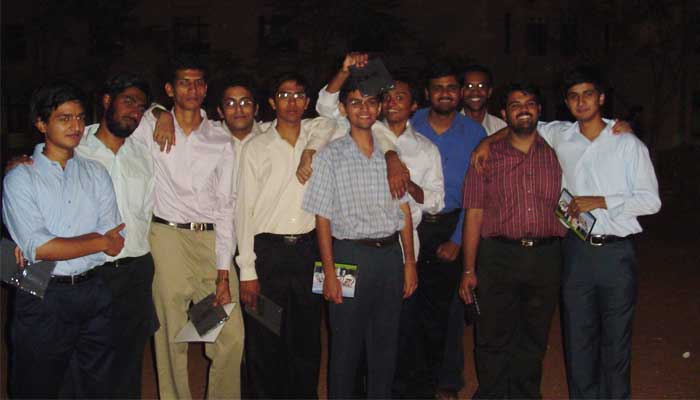
Growing up in Lucknow, Manish came from a strong academic gene pool of IITians, doctors and engineers. “My sister broke the mold by taking up commerce and I took up engineering and entrepreneurship. Though I was very passionate about sports, I had more failures in sports but more successes in academics” laughs the school topper in Class 10 and 12 who overcame ill-health during the run up to JEE, to get a good score to join IIITH. “Meditation was always a key part of my morning routine, a family rule that grew into a habit”. Leisure time for Manish involves teaching little things like writing and drawing to his 5-year-old son Kavish and learning chess and piano with him. “What gives me joy is a bit of everything; a game of badminton or soft lyrical music, audio books and podcasts that makes Bangalore traffic bearable”.
Manish Jain and his wife Kanupriya, an electronics engineer turned Math teacher seamlessly moved into educational entrepreneurship on their return to India, running franchises of Aakash Institute and The Princeton Review. “We are working on exciting things in Indic languages and I am now also thinking about a faculty position to utilize my international exposure and entrepreneurial experience”, says Manish who believes that his decision is driven by his passion for teaching the next generation.
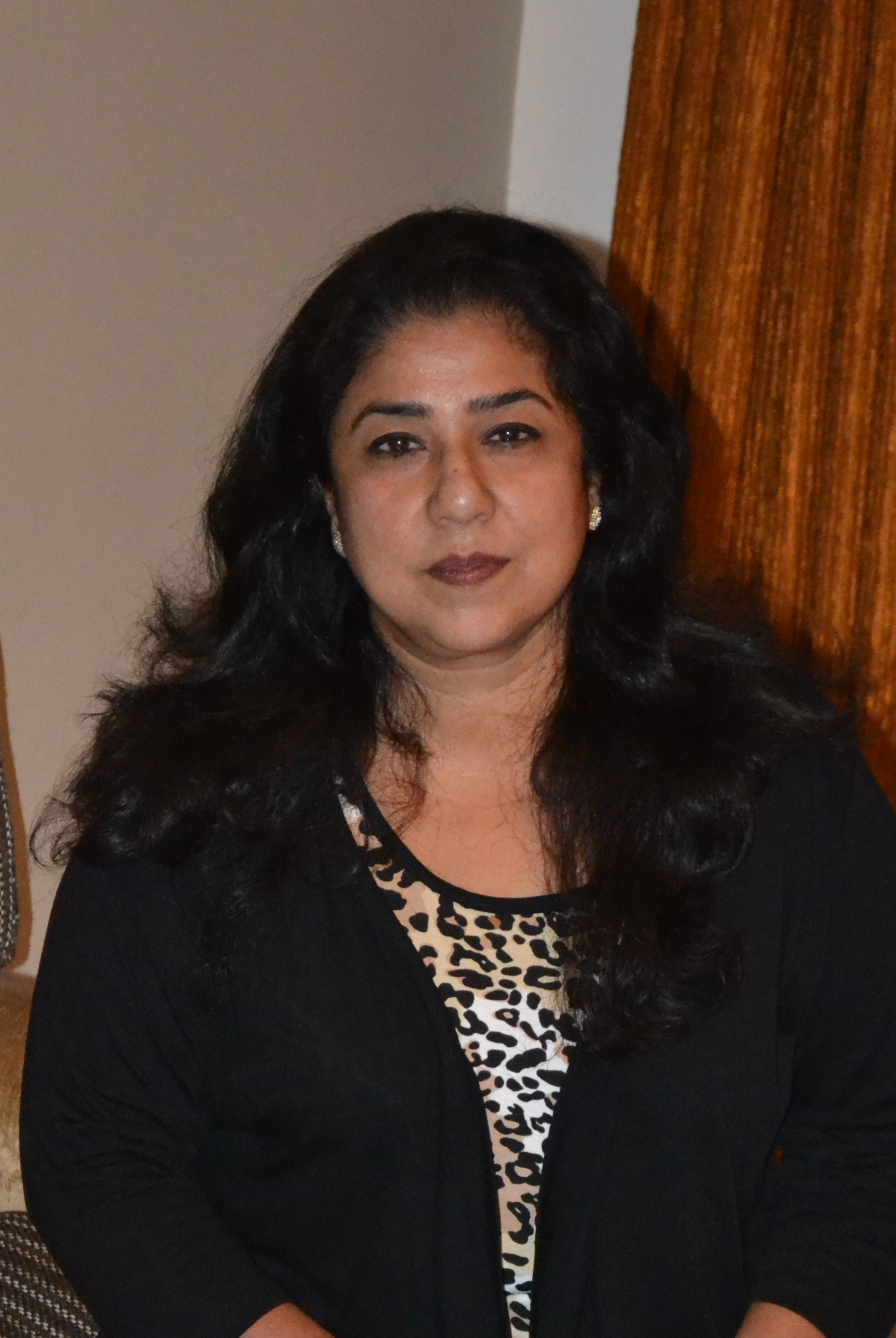
Deepa Shailendra is a freelance writer for interior design publications; an irreverent blogger, consultant editor and author of two coffee table books. A social entrepreneur who believes that we are the harbingers of the transformation and can bring the change to better our world.
Next post