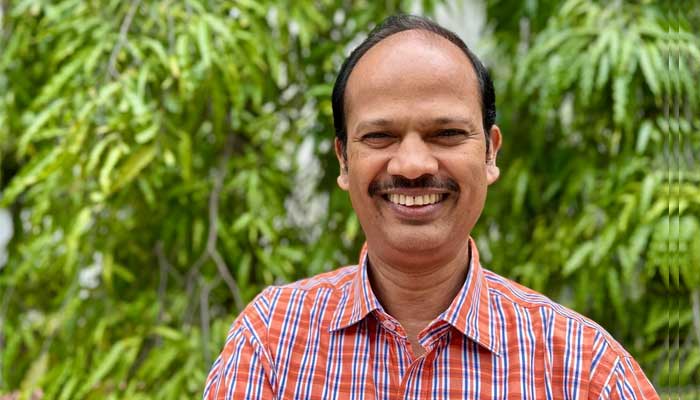
Prof. Tapan Sau’s specialization in experimental chemistry and nanotechnology, made him ideally suited to set up a research-cum-teaching Science Lab at IIIT Hyderabad’s Science Center in its initial days. A PhD from IIT Kharagpur with two post-doctoral fellowships in US and a Humboldt Research Fellowship made his nanoscience research widely cited worldwide. He is presently inspiring batches of students of technology at CCNSB to diversify into nanomaterials.
It was perhaps the trials and tribulations that peppered the path of an earnest seeker from a small Bengal village in West Midnapore district, that would drive his passion in an unlikely field of study. “My specialization is in physical chemistry, but my research interests are in nanomaterial science; developing nanomaterials with controlled sizes, shapes, and properties for probing, sensing, imaging, and energy-related applications”, says the researcher who pegs his work at IIIT Hyderabad as high-end science.
“As an individual lab, our Science Lab is comparable to that of most good universities. We have been working with diverse range of materials like metals, semiconductors, polymers, etc.”
“During my postdoctoral tenure, I have prepared and patented electrocatalysts for hydrogen fuel cells (for US-based OM Group, Inc.). Most importantly, I broke the common belief that it is difficult to get highly anisotropic directional nanomaterials from isotropic metals like silver and gold. I successfully experimented with different nanostructures that made it to the headlines in the ACS Chemical & Engineering News.” The work created some waves in the nanomaterials fraternity and made him one of the most cited scientists in his field of research. It has led to many more significant discoveries in the fields of nanotechnology.
Early challenges that honed his talent
The untimely demise of his father when he was about five years old would put the family responsibilities on the young shoulders of his mother and three elder brothers. He studied at Baita MN High School near his village and then moved to the Ramakrishna Mission Calcutta students’ home securing a free studentship. “Most of my formative years was shaped by monks and friends in the Ramakrishna Order”, he admits. “As a student, I was always very serious. I cleared my NET-CSIR and GATE exams in my Master’s years. I didn’t waste a single day in my academic journey, completing PhD selection at IIT Kharagpur, within 24 hours of getting my Master’s from Calcutta University.”
Rejigging mentor’s field of research
His PhD in nanomaterial science (1998) from IIT Kharagpur would be the first of many satisfying projects. His thesis was on silver nanomaterials. “Initially my PhD advisor Prof. Tarasankar Pal and his wife Prof. Anjali Pal and later Dr. Nikhil Jana, my senior, played great roles in my research training. I have been very lucky with my advisors. Though I was my advisor’s first PhD in nanomaterial science, in no time, his analytical science team became a famous nanomaterials research group. Later, he became one of the 100 most cited scientists globally, in the field of materials science”. After joining Panjab University as an assistant professor, Prof. Tapan went on to complete three years of postdoctoral research at two universities in USA.

“My first tenure was at Clarkson University, New York, famous for advanced materials research; where I met two great materials scientists, Prof. Dan V. Goia and Prof. Egon Matijevic, and later the University of South Carolina, Columbia with mentor Prof. Catherine Jones Murphy, another great woman scientist. I later went on the Humboldt Research Fellowship to the Ludwig Maximilian (Munich) University (LMU)” where I worked with Prof. Dr. Jochen Feldmann and Dr. Andrey Rogach.


Life on IIITH campus
Prof. Tapan first learned about IIIT Hyderabad from Prof. Harjinder Singh, his senior colleague at Panjab University, who had high praise for the Institute’s ease of work processes and zero bureaucracy. He joined IIIT Hyderabad in September 2009. “They were looking for an experimentalist for the Computational Natural Sciences program, that had a science curriculum but no experimental backing for undergraduate level. I loved the atmosphere here. Simply put, the term colleague actually meant something here. Everyone was friendly and helpful, and though it took a lot of hardship to establish my laboratory, someone had to do it, and I am happy that it was me!”, exclaims the scholar. “I got to develop a beautiful science lab and introduced many scholars to experimental research. Overcoming obstacles and establishing the lab gave me a different kind of satisfaction. We started from scratch – plastering, flooring, setting up furniture and equipment, even electrical wiring. Prof. Jayanthi and my CND colleagues helped me a lot in setting up the lab”.
Synergistic collaborations happened with Prof. Syed Azeemuddin, Prof. Aftab Hussain and Prof. Zia Abbas on significant projects and more recently on a DST- Purse project “for which we have developed Fab Labs and sophisticated instruments facility”, adds Prof. Tapan who is presently learning about theoretical and computational concepts along with his masters’ students, something that was always on his wish list.
Growing up in a lush green campus
“IIIT Hyderabad was a great place to bring up my son Mitesh who had a very nice time in the Faculty and Staff Quarters, growing up amongst friends from all age groups. My wife Kaberi is working on a project in LTRC under Prof. Dipti Misra. Things that I admire here are the sense of discipline and dedication. I often tell my family and friends that if we could combine our Indian family values and the Western work discipline, this world would be a much better place to live”.

One touching memory goes back to 2012 when Prof. Tapan was offered an associate professorship role with six laboratories at Clarkson University. “When the news reached then IIITH Director Prof. Sangal, he called me to his office, sketched out his vision and told me that I should create all those things, right here at IIIT Hyderabad. I never thought that a director of his stature would personally take interest in my work”, says the professor with about one hundred research publications and four patents, who teaches general chemistry and nanoscience-related courses at IIITH. “I edited one book titled ‘Complex-shaped Metal Nanoparticles – Bottom-Up Syntheses and Applications’ and have contributed chapters to four books. Right now, we are working to develop procedures and materials to sense and detect different types of pesticides in food stuff. Earlier we had developed a breath analyzer for the detection of acetone, a biomarker for Type 2 diabetes and also a nanoparticle-based protein detection method. In the future, we plan to develop simple biomedical sensors”, he reports.

From a campus of purity to a haven of science and technology
“I enjoy folks and jokes”, laughs Tapan. “I loved cracking jokes and entertaining family and friends at a very young age. I listen to all kinds of folk music but am partial to Bengali and Rajasthani ones. Though untrained, I love singing chiefly Bengali folk songs.”
“I am what I am because of the Ramakrishna Mission. I got a free studentship from the Ramakrishna Mission where everything was provided, from fees and books, even down to my shaving kit. The Ramakrishna Mission Calcutta Students’ Home was like a piece of heaven, where we grew up in a free and beautiful atmosphere” says Prof. Tapan who had many opportunities to showcase his talents at cultural events throughout the year. Even today, during reunions, he is a regular performer in cultural programs. As the chair of the student life committee, he is very involved in the various programs on campus. He has served as Chair of the Student Life Committee for the last five years. An avid lover of books, Prof. Tapan has had a long association with the Library Committee. During Holi celebrations, the self-taught percussionist usually plays the drums or dholak.

“In Class six, when I started reading biographies of scientists like Satyendra Nath Bose and Jagdish Chandra Bose, I had found my role models”, notes the researcher, who was recipient of the West Bengal Merit Scholarship in Class eight and National Scholarship in Class ten. Book shops and electronics shops are two places where he loves to hang out. “I cannot go a day without reading. Nowadays, my reading list is more about scientific discoveries. Maintaining work-life balance is tough and very much skewed towards IIIT related activities. But I do take time out for my morning exercise and yoga”. Prof. Tapan Sau recharges his batteries by watching YouTube videos or reading Ramakrishna-Vivekananda literature. His advice to young students is this: “Be very mindful during your first semester. Consult with seniors, friends and professors and when solving problems, take their help and life will be very easy here”.

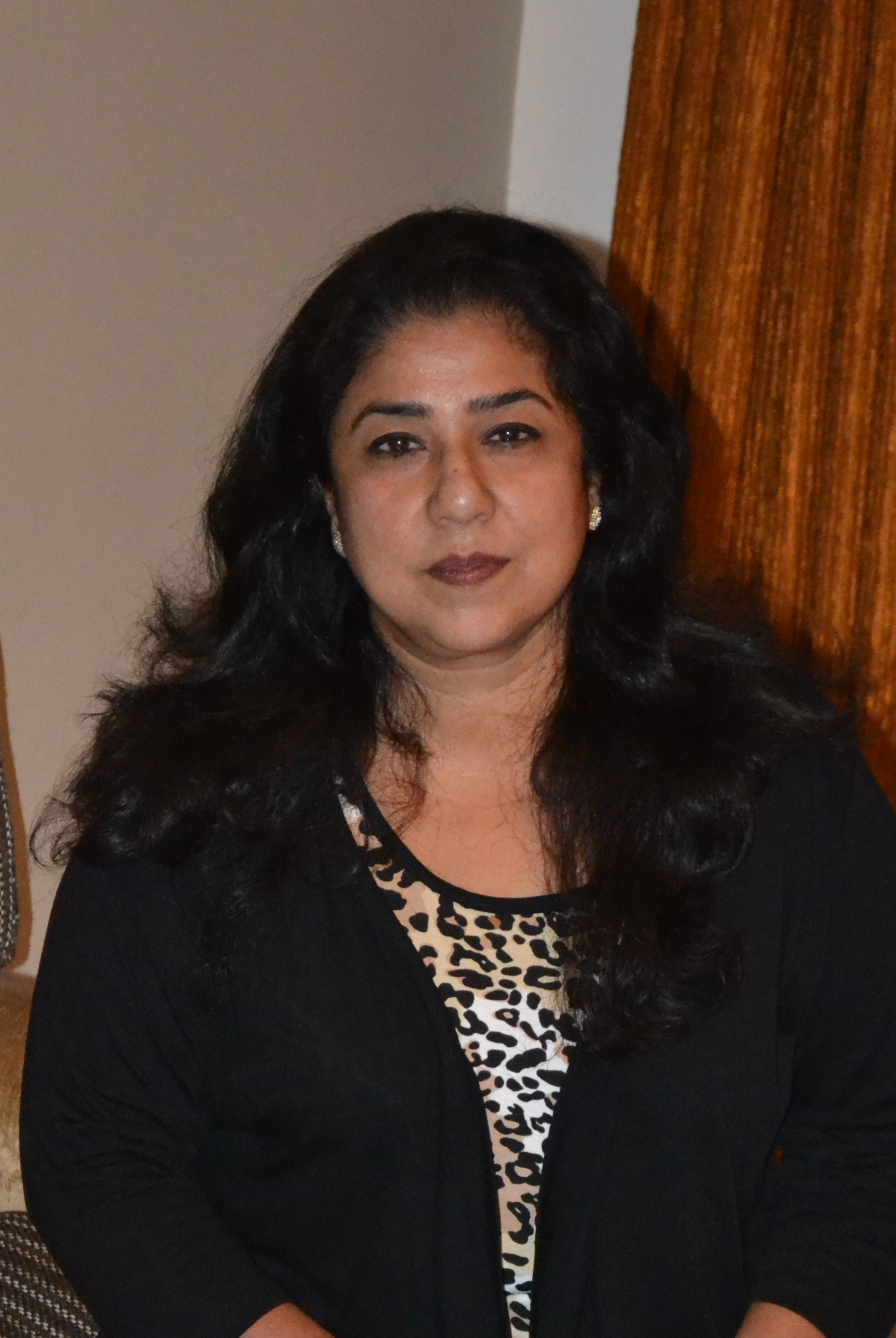
Deepa Shailendra is a freelance writer for interior design publications; an irreverent blogger, consultant editor and author of two coffee table books. A social entrepreneur who believes that we are the harbingers of the transformation and can bring the change to better our world.
Next post