

Sujal Deoda’s paper on the etymology of keywords in AI, co-authored with HSRC advisor Dr. Aakansha Natani, piqued the curiosity of AI experts and social scientists and earned him an all-expenses paid trip to the 2nd annual conference of the International Association for Safe & Ethical AI (IASEAI) in Paris. The extrovert shares more.
It was an episode filled with drama, from start to finish.
From a missed submission deadline late last year, to the paper being accepted for the IASEAI Paris conference, to being on the last connecting flight to Hyderabad via Doha before airports shut due to the war in West-Asia, it was an adrenaline-packed trip for Sujal Deoda.
IASEAI (pronounced eye-see-eye), an independent nonprofit organization hosted its second annual conference and workshop between February 24-26 2026 at the UNESCO House in Paris. The platform brings together thought leaders from academia, industry, policy groups and civil society to forecast red flags, “risks and opportunities in the rapidly changing AI landscape and discuss safe and ethical practices to benefit humanity”.
Words carry weight
A 4th year student of IIIT-H’s 5-year Dual Degree CHD program, the B. Tech in Computer Science, and Master of Science in Computing and Human Sciences by Research, gave Sujal a good sense of both worlds.
“Dr. Aakansha played a crucial role in shaping my initial interests and formulating the idea. She introduced me to this dataset and spoke about the various evolving concepts and shifting priorities within the European Union. What struck me also was that my friends who were working on these projects, were constantly using terms like explainable AI, Safe AI, green AI, sustainable AI, human-centric AI, Carbon-efficient AI or Trustworthy AI. From this evolved the framework of my paper.”
From a policy perspective, Sujal started a preliminary analysis, of the European Union which was the first to come up with policies and an act related to Safe AI. “In a timeline from 2018 to 2025, through the lens of keywords, I traced which word came up for the first time in which year, how many times it appeared in documents, which institution in the EU brought up that word and whether it was converted into a law or draft that was actionable”, observes Sujal who wrote the paper over the summer of 2025.
Missed deadlines and happy surprises
“I am so grateful to my advisor Prof. Aakansha for sharing this opportunity with me, since the IASEAI conference theme aligned well with my paper”, remarks Sujal. Their paper, ‘Tracing the Moving Target; locating value propositions on AI ethics in the European Union’ was intriguing enough to earn him a free ride to Paris, on a travel grant.
“On the day of the deadline, everything was ready and I just had to hit the Submit button”, he says sheepishly. However, in the hullabaloo of participating in Megathon, the college hackathon, he missed the 6 PM submission deadline. “We won the hackathon, but I realized that I had overshot the conference deadline. I immediately dashed off an email to the organizers and was elated when they responded positively within two hours”, notes the extrovert. “In mid-December I got news that my paper was accepted for a Presentation. That is when I realized that the venue was the UNESCO house in Paris”.
Vive La Paris
During conversations in Paris, Sujal came to know that the bursary and scholarship was given to few candidates and that felt special.
It all started well. “The first thing I bought in Paris was a croissant”, he says with a grin. “Since I had extended my stay, my hotel near the Arc de Triumph upgraded me. I was journaling and scrapbooking my trip, as I roamed around, getting a feel of the city. It took the entire first day to get out of my ‘Gujju mindset’ of converting the euro into the rupee equivalent. Having binge-watched Emily in Paris, visiting locations from the show and the beautiful Luxembourg Garden, watching the first sparkle of the Eiffel Tower as it lit up and exploring the city with the City Mapper app was such an amazing rush”, recalls the scholar who was hooked on to the aromas of bread and coffee, wafting up from roadside cafes.

Conversations over Granny Smith apples
The imposing UNESCO house, located near the Eiffel Tower was teeming with academic and industry experts that Sujal had read about, while researching the conference online. “Everything was well thought out; a map, a cloakroom, canopies with finger foods so that you could constantly interact and engage. They even issued a virtual credit card to make all the payments which really fascinated me”. For the foodie, the grab-and-go fancy foods like Granny Smith apple with walnuts, honey and goat cheese sandwiches and other vegetarian delights were as delicious as the elegant sundowners every evening. “Seeing flags of all the nations together at the venue, truly struck my heart.”
The best part of the conference was that all panel discussions and workshops were a confluence of tech and social sciences coming together to discuss the importance of safe and ethical AI. There were experts in philosophy, humanities, professors from data science, computer science, artificial intelligence as well as industry leaders from Google, Anthropic, Infosys etc.
“My panel on human values and social norms in the age of artificial intelligence comprised a mixed bag of computer science experts talking about AI models, sociologists talking about democratic and authoritarian regimes and how society is shaping this technology”. Conferences are generally targeted to a single community; but here, humanities experts were in dialogue with computer scientists about technology that is eventually shaping you.
Sujal recalls being overwhelmed by the kindness of people around him, whether it was a pat on the shoulder or an academic capturing his big moment on stage and sending him the photograph. “Sensing my nervousness before my presentation, my Panel chair, Ms. Songya and a fellow panelist, Harvard professor Nathan Miller, assured me that I would be fine. At a post-presentation panel discussion alongside a senior data company owner, I was really happy with the argument that I presented. I was also fortunate to meet Prof. Smriti from Bangalore who came up to me and said, you need to know that you’re doing a really great job at being here”.

Something that stuck with Sujal was an observation by organizer Prof. Stuart Russell. “He observed that it took a catastrophe like Hiroshima and Nagasaki for world leaders to see the need to regulate nuclear technology. When we are aware of the harm that Artificial Intelligence can cause, we shouldn’t be waiting for a catastrophe to happen, to regulate it”.
Key learnings from the conference
“The conference had asked for a full paper summation and I had a paper ready, which I was constantly refining”, notes Sujal. “After the conference, I realized that a lot of the research in our Institute Laboratories fits in well with the conference theme. In my panel specifically, the consensus was that currently, we do not possess tools to effectively transfer ideas into applicable governance mechanisms. There is a need to find new channels and pathways too”. A key takeaway from the panel was also that there is a gap between how bureaucrats perceive these concepts of safe, responsible and ethical AI and scientists who are developing these technologies.
Sujal loves meeting people and ascribed his participation in IIIT-H campus events with helping him to network at the Paris conference. Initially he did try to curb his enthusiasm. But when he found his grades were holding up, he deep dived into organizing cultural events on campus; as coordinator of the Art Society, member of the dance crew, marketing head of the college magazine, Design head of the college Fest and captain of Vayu House. Origami, sketching and painting is calming while dancing and casual conversations are stress busters for the young engineer.
Sujal concludes by thanking his advisor Dr. Aakansha, his friends and lab mates Nanda Rajiv and Siddhi Wadekar for their constant encouragement, insights and critiques. “Without them, this wouldn’t have been possible. Having lab meetings every week was a really helpful motivator and those discussions helped a lot, pushing me to work harder and better”, he mulls.
Interacting with all stakeholders in one place at the IASEAI conference helped Sujal Deoda identify new research questions within the broader theme in AI ethics and governance. “I don’t know what the future holds for me, but while I am part of my Lab at IIIT-H, I hope to continue engaging in broader discussions that emerge around these themes”
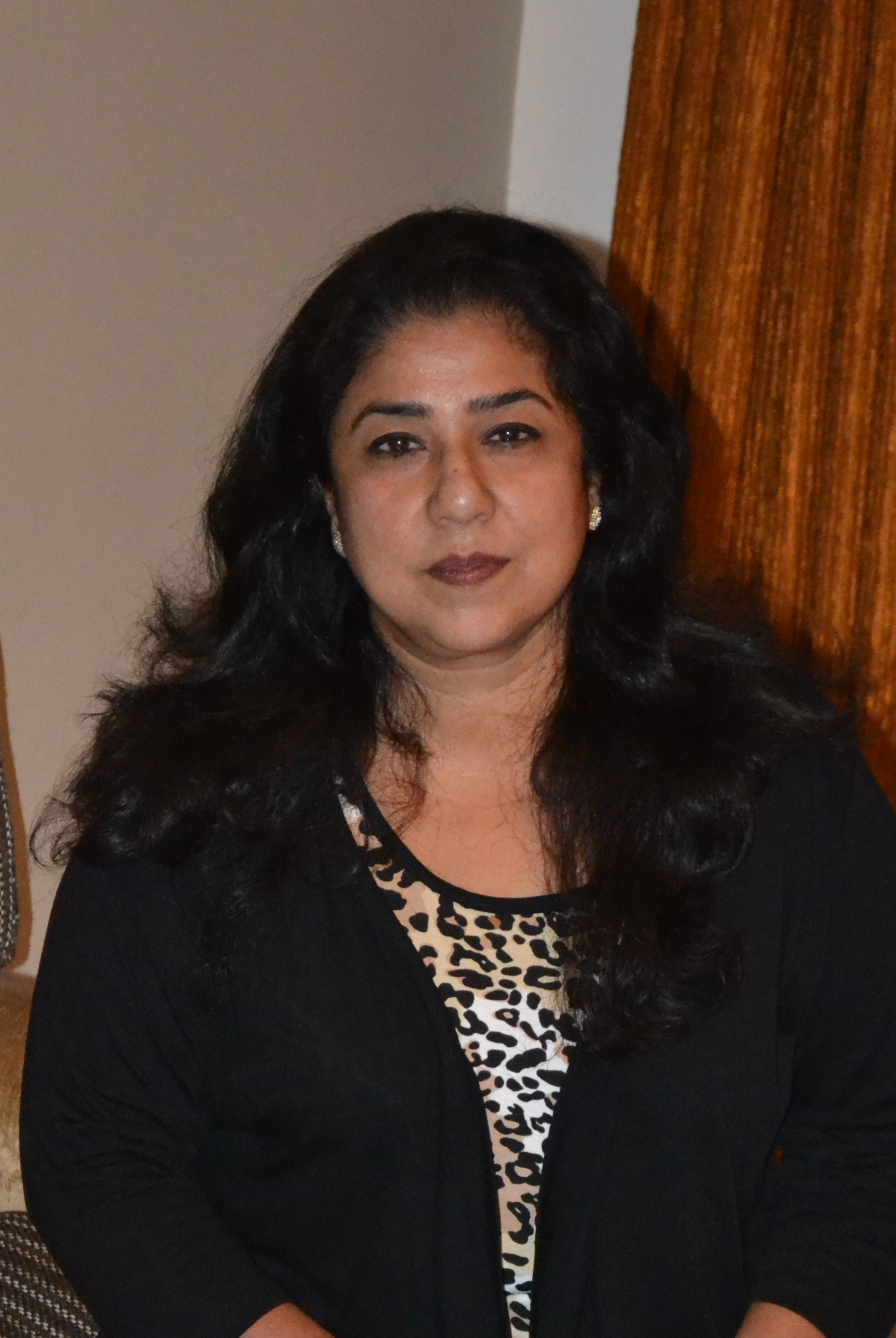
Deepa Shailendra is a freelance writer for interior design publications; an irreverent blogger, consultant editor and author of two coffee table books. A social entrepreneur who believes that we are the harbingers of the transformation and can bring the change to better our world.
Next post