

The journey through academia is rarely a straight line; it is more like the “unorganized traffic” of a busy Indian junction – complex, mixed, and constantly evolving. For Prof. Praveen Paruchuri, the path over the last two decades has wound through the foundations of game theory, the high-stakes world of airport security, and the future of intelligent transportation.
Prof. Paruchuri’s research journey truly began in 2002 with a paper at the first-ever AAMAS conference – an international conference on Autonomous Agents and Multiagent Systems. It tackled a uniquely local problem: multi-agent simulation of unorganized traffic. While Western simulators focused on strict lane discipline, this work introduced the world to “unorganized traffic” characterized by weak lane discipline and mixed vehicle types. It was the first step in a career-long fascination with how agents – whether cars or humans – interact in complex environments.
The “ARMOR” of Randomization
The most significant breakthrough came during Prof. Paruchuri’s PhD years with the development of the DOBSS (Decomposed Optimal Bayesian Stackelberg Solver) algorithm. At its core was a simple but powerful philosophy: “randomization decreases predictability, and this increases security of systems”.
By avoiding the traditionally expensive Harsanyi transformation, the DOBSS algorithm achieved a double exponent decrease in complexity, making it a significantly efficient optimal solver for Bayesian Stackelberg games. This wasn’t just theoretical; it led to the ARMOR system, deployed at Los Angeles International Airport (LAX) in 2007. It fundamentally changed how security resources are managed by introducing the philosophy that “randomization decreases predictability, and this increases security of systems”. For over 15 years, this system has randomized police checkpoints and canine units, significantly increasing the number of firearm and drug violations caught.
This work didn’t just solve a problem at one airport; it initiated the entire field of “Security Games,” spawning hundreds of research papers, two dozen plus theses and practical applications like PROTECT (Port Resilience for Operational Tactical Enforcement to Combat Terrorism) for port security where much like ARMOR, uses patrol randomization. Followup works or significantly enhanced systems are currently being used to improve security at major hubs like the Boston and New York ports. Another outgrowth of this line of work is the PAWS (Protection Assistant for Wildlife Security) system for wildlife security. PAWS is integrated with the SMART wildlife conservation software, making PAWS available for use at 100s of national parks around the globe.
Smarter Cities: Transportation and the Grid
Prof. Paruchuri’s research eventually expanded into the “Intelligent Transportation” domain. Innovative algorithms like BLS (Best Lane Strategy) and FLS (Fixed Lane Strategy) were developed to help emergency vehicles like ambulances navigate traffic more effectively. Vehicle navigation improved through the analysis of traffic at the lane level rather than just at the road level.
Beyond speed, the focus shifted to the environment. A US-patented method for “pollution-aware traffic routing” along with enhancement over it uses Mathematical optimization and Markov Chain Monte Carlo (MCMC) algorithms to spread traffic more evenly across a city. The goal wasn’t necessarily to decrease total pollution, but to prevent it from accumulating in specific “pockets” where it affects long-term human health. As the professor notes, “The idea was to be able to distribute pollution better across the city”.
On the energy front, the Team Vidyut Vanika was the specific broker agent developed through a collaboration between IIIT-H and the TCS (Tata Consultancy Services) research team which went on to dominate the international PowerTAC (Power Trading Agent) competition. It is centered around a smart grid simulation platform developed by a consortium of European universities proving that AI “broker agents” can effectively manage the complexities of a smart grid marketplace.
Protecting the Skies and Numbering the Streets
Recent projects have applied machine learning to national defense and infrastructure. Working with Bharat Electronics Limited (BEL), an AI ensemble model was developed to detect flights pan India,that improves the accuracy of Indian Air Force surveillance systems from 91% to 96% by correcting the “splitting” and “merging” errors in radar data.
Even the most basic infrastructure – the house address – has been reimagined. A recent work at IGARSS ’25 (the International Geoscience and Remote Sensing Symposium) introduced an automated road numbering algorithm to create interpretable digital addresses for cities like Hyderabad, moving away from informal landmarks like “the house behind the tree”.
The Human Ecosystem
Beyond the algorithms, academia is built on service and mentorship. For Prof. Paruchuri, teaching courses from Discrete Math to Artificial Intelligence has been a decade-long staple, which he admits would not have been possible without the support of “many TAs… and of course, the many students who voluntarily or not became part of the journey”.
His work extends into the institute’s fabric through the Alumni Affairs Committee, which handles activities ranging from fundraisers to research travel grants and “landmark anniversary” celebrations.
Looking Ahead: The Age of LLMs
As Prof. Paruchuri’s journey from 2002 to the present illustrates, the evolution of research is not just about advancing algorithms, but about creating a tangible real-world impact across diverse ecosystems. Admitting that the pace of innovation is astonishing in a year where ML has swept the Nobel Prizes and the Turing award, he says, “The field is shifting from traditional ML to Agentic AI where LLMs don’t just answer questions but act as backbones that call APIs to order food, schedule meetings and adapt to human preferences”. The vision is of course clear: to keep track of these developments while maintaining a coherent line of research that creates real-world impact.
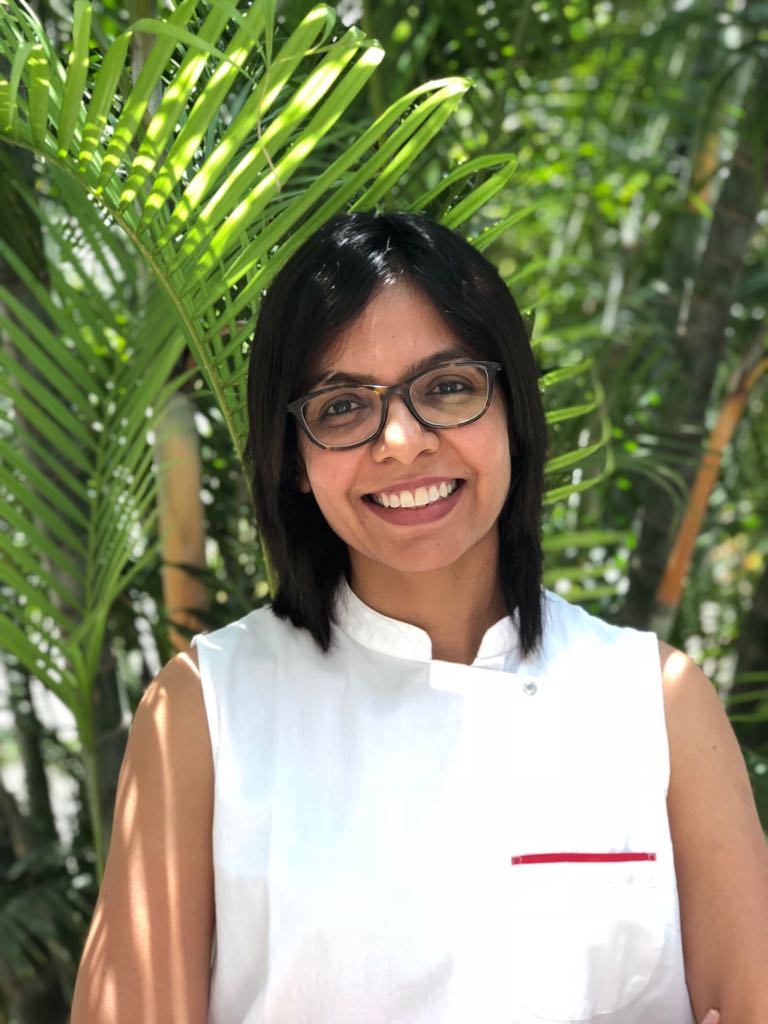
Sarita Chebbi is a compulsive early riser. Devourer of all news. Kettlebell enthusiast. Nit-picker of the written word especially when it’s not her own.
Next post