
For Prof. Abhishek Singh, the domino effect of two global events, the pandemic and Israel-Gaza war in October 2023 would lead to a series of circumstances culminating in the theoretical computer scientist joining IIIT Hyderabad. At SERC, his team uses the lens of logical thinking and theorems for problem solving.
Dr. Abhishek was on his first post-doctoral work at Tel Aviv University when the Israel-Gaza war broke out. On October 14th 2023, they were given a two-day notice by the Indian Embassy to evacuate and return to India. While figuring out his next move, he attended a conference at IIIT Hyderabad that would spark an interest in working at the Institute; which he did, after his second post-doctoral tenure at National University of Singapore.
Dr. Abhishek Kr. Singh, now an Assistant Professor at IIIT-H’s Software Engineering Research Centre (SERC) has cherry-picked his way through premium institutions in India, and drawn on inspiring experiences at Tel Aviv and Singapore, especially in the field of Program Semantics. A Ph.D in Computer Science from TIFR Mumbai, postdoctoral researcher at the Tel Aviv University in Israel , Senior Research Fellow in the Programing Language and Software Engineering at NUS and as faculty at BITS Pilani – Goa, he has explored a broad range of topics in theoretical computer science including Formal Methods, Programming Languages, Software Engineering, Program Semantics, Relaxed Memory Concurrency, Theorem Proving, Automated Reasoning, Program Synthesis, and Trustworthy Artificial Intelligence.
His current research in trustworthy parallel computing is focused on developing tools for industry professionals to automatically verify their code or programs. Going forward, he is excited about the prospect of future collaboration with the Center for Robotics and the Lab for Spatial Informatics. He aims to apply his software engineering research to impactful areas like robot motion planning and precision agriculture, exploring the use of advanced software and explainable AI in these fields.
COVID Pandemic, a war and journey to IIIT-H
Growing up in India’s famous railway town of Chittaranjan, the researcher can trace at least two generations of family, including his father, grandfather and a slew of relatives both close and distant, who were associated with Chittaranjan Locomotive Works , a key hub of India’s electric locomotive production.

After early education at Chittaranjan’s railway school, and B. Tech in Computer Science from the Government College of Engineering and Textile Technology, Berhampur (2003-2007), Abhishek secured his M. Tech in Media and Sound Engineering (2007-2009) from IIT Kharagpur.

While Abhishek was always passionate about Physics, the career options for a physicist was always a sticking point. “I compromised by following my passion in theoretical computer science because that was closest to physics”, he quips. “Post my Masters’, I intentionally moved to a three year teaching role at Tripura’s ICFAI University (2009-12). This was a much-needed break before diving into my Ph.D in Computer Science at the Tata Institute of Fundamental Research (2012 – 2020) Mumbai. “My doctoral studies extended to seven years since I was making that shift into theoretical computer science.”
The Covid pandemic delayed Abhishek’s move to Tel Aviv for his first post-doctoral research. He waited out the lockdowns by taking up a faculty position at BITS-Pilani Goa campus and enjoyed the two-year tenure there. In February 2022, he moved to Tel Aviv University (Feb 2022 to Jan 2024) Israel, for his post-doctoral study in program semantics with a specialization in the weak semantics of parallel programs.
“Through my entire academic journey, my Tel Aviv experience was probably the most significant. When the Israel-Hamas war started and we had to return to India, I had to find something immediately. To my good fortune, I happened to visit IIIT Hyderabad for a conference and got to meet Prof. Venkatesh Choppella and future colleagues. They offered me the option of completing my post-doctoral work and joining IIIT-H as faculty”, recalls Abhishek, who quickly got a good post-doctoral offer as Senior Research Fellow at National University of Singapore. The tenure expanded his area of study in Israel, to include AI and Automated Reasoning for Trustworthy Software Development.
Problem solving using the lens of logic
“When you write a program, with a specific intention, there is no straightforward way to verify if the written code meets your intention. To bridge this gap between intent and implementation, we come up with tools and techniques to write objectives in a much more formal setting, using mathematical theorems and logic”, he explains. “At IIIT-H, my teaching and research projects are aligned to building a group of researchers with this mindset of focus on the discipline of validation, from the starting point of writing code.”
If you thought that sequential programs give one a tough time, Parallel programs are even more notorious. Abhishek explains “The logic for reasoning about parallel programs in modern architectures and languages is often highly non-intuitive. It’s unrealistic to expect even expert programmers to manually reason with such complexities. That is precisely why,” he notes, “I believe the most promising research direction is building tools that automate or are directly inspired by these intricate semantics. This is how we can move toward automatically verifying parallel software.”
His research interests extend beyond formal verification. He is keen to apply advances in software engineering and machine learning to agriculture, an inspiration drawn from his time in Israel. “I want to bring the best of software engineering and explainable AI to precision agriculture,” he says, “a domain Israel has pioneered for nearly three decades.”
Beyond his primary role, Abhishek maintains active research collaborations with Prof. Ashish Mishra in the CSE department at IIT Hyderabad, focusing on software engineering and programming languages, and continues to work closely with Prof. Ori Lahav at Tel Aviv University.
Lessons learnt at Tel Aviv and Singapore
“Tel Aviv is a wonderful city on the Mediterranean,” he observes. “The campus environment was vibrant, and I found everyone to be open, approachable, and genuinely keen to engage with my work. I spent two incredible years collaborating with Prof. Ori Lahav in the field of Shared Memory Concurrency and Weak Memory Models. One standout feature was a culture of continuous refinement. In India, we tend to migrate quickly to the next topic once a problem is solved. In Israel, however, there is a commitment to building upon existing foundations—a methodology that I believe puts them ahead.”

“While my training has been largely theoretical, my time in Israel and Singapore showed me how to apply that theory to real-world problems. For instance, a deep mastery of program semantics and mathematical logic allows you to build significantly more efficient tools for automated bug detection and program repair. They bridge the gap between abstract logic and industrial impact.”
Abhishek’s scholarly contributions extend well beyond his ten peer-reviewed publications in elite venues. He maintains a robust service profile within the research community, frequently reviewing both manuscripts and artifacts for top-tier conferences such as POPL, PLDI, ICFP, CAV, TACAS, iFM, and OOPSLA, as well as specialized journals including the Journal of Automated Reasoning and Formal Aspects of Computing.
IIIT-H and the best of both worlds
“I have been at IIIT-H for a short six months now but what I love here is a certain happiness vibe among faculty. When you are inside campus, everything outside is just shut out, but if you want something, it is immediately accessible. You have the best of both worlds. It is a very welcoming community and everyone is ready for a chat! The Orientation for new faculty was especially very engaging and I liked the way they spoke about campus life that is to be expected when you join IIIT-H. Prof. Karthik Vaidhyanathan and Prof. Tejas Bodas were always accessible and helpful, whether it was applying for grants or finding a school for my six-year old son along with Prof. Raghu Reddy , Prof. Venkatesh Choppella, and Prof. Raman Saxena who were most obliging in getting me settled in”.
Early life in a quaint old railway town
Most of the researcher’s best memories are from Chittaranjan, a very beautifully planned railway town, where two generations of family worked in Chittaranjan Locomotive Works. “My whole family is there in one place”, he comments. His wife Sweta and he also share common context and vocabulary, as she grew up barely 5 kilometers away from him.

Abhishek loves deep debates and discussions, especially around geopolitics. His go-to music playlist are old Hindi movie tunes by Kishore Kumar and Kumar Sanu. When he has the chance, he enjoys swimming, a favorite childhood sport. Maintaining a good work-life balance was a challenge till their son, Kishan came along and realigned his work day to regular hours.

Mulling on what is exciting in the days ahead, Abhishek says, “I want to focus my immediate attention on building a very strong group here and exciting them to use theory to build some real tools. We have very good intellectual capital here in IIIT-H and the best part is that we get smart dual degree students for three years, which is like a mini Ph.D. So I don’t want to lose on these assets and want to quickly build a team because when we move to systems research from theory side, we will need many smart researchers working together to build Real systems and study its correctness”.
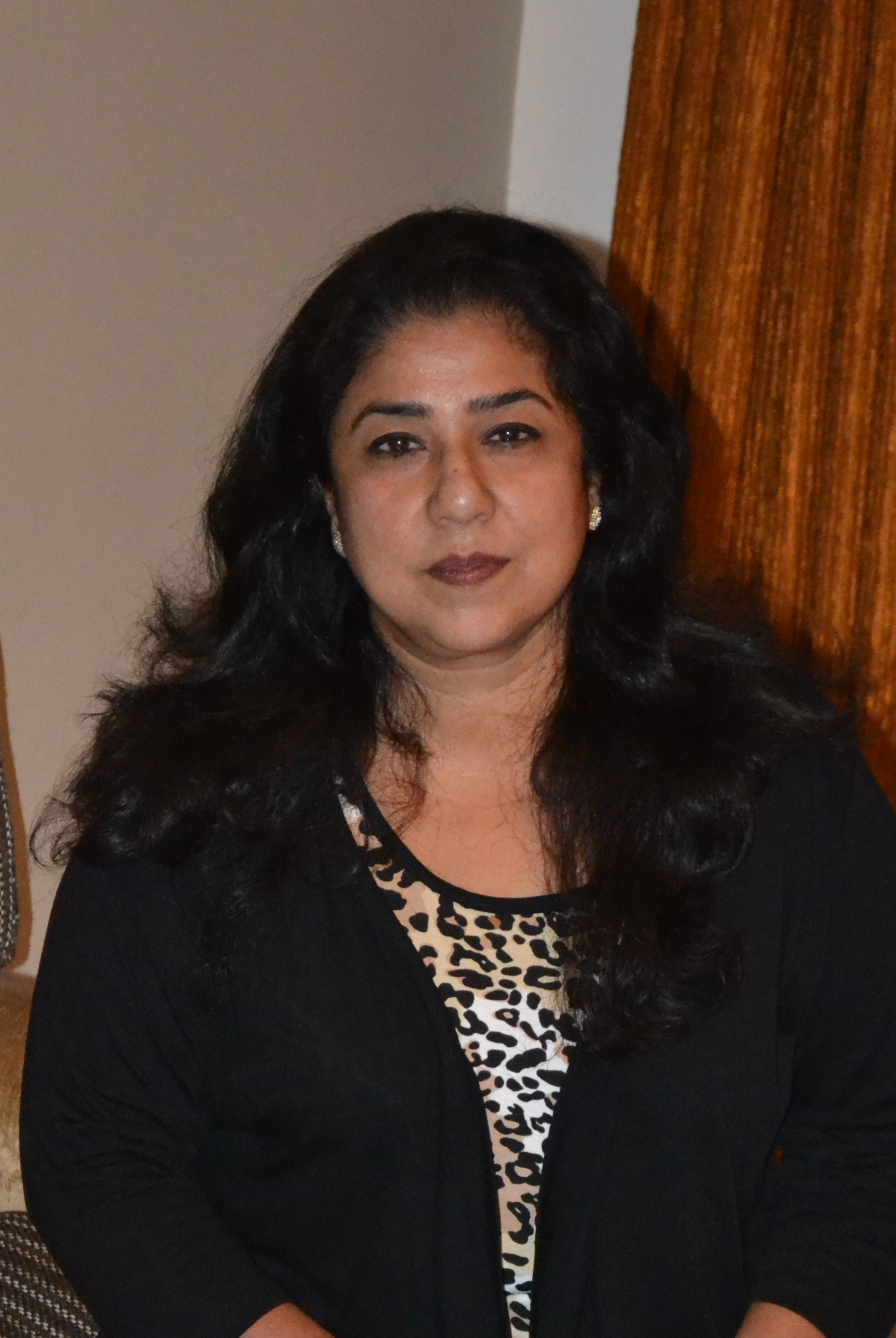
Deepa Shailendra is a freelance writer for interior design publications; an irreverent blogger, consultant editor and author of two coffee table books. A social entrepreneur who believes that we are the harbingers of the transformation and can bring the change to better our world.
Next post