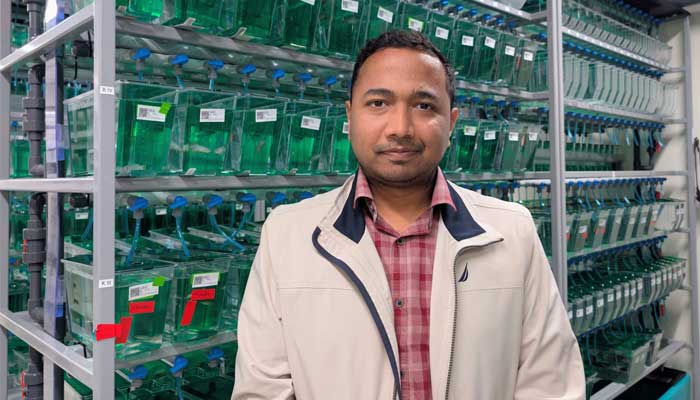
Abhinav Mittal, a IIIT Hyderabad alumnus and postdoctoral fellow at the University of California, San Francisco talks about his interesting line of study at the Bakar Aging Research Institute. He credits the exciting work in RNA structures at his CCNSB lab with informing his future academic choices in computational genomics, software development and machine learning.
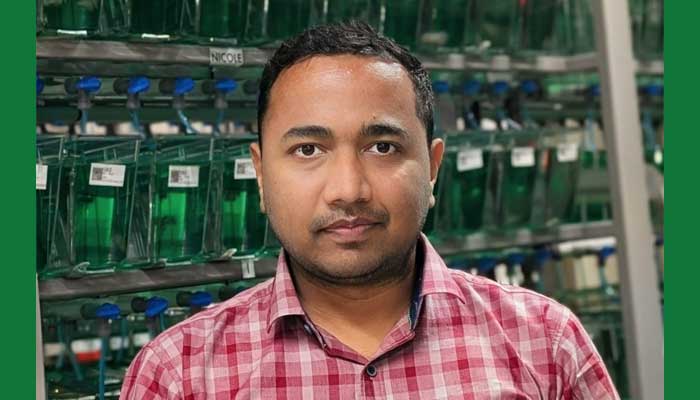
A postdoctoral fellow at the Bakar Aging Research Institute, UCSF, Abhinav is currently developing algorithms and web-based resources for multiomics data analysis in African turquoise killifish; combining computational approaches with biological research to advance our understanding of aging and other biological processes.
Earlier, under the mentorship of Prof. Abhijit Mitra at IIIT-H’s Center for Computational Natural Sciences and Bioinformatics (CCNSB), the dual degree student topped BINC 2016, the Bioinformatics National Certification Examination by Department of Biotechnology, after clearing the three-stage examination with a national ranking.
A small discovery in RNA structures made as a Masters’ student at IIIT-H, still remains one of his top cherished moments.
Serendipity brings him to the Institute
It was a newspaper admission notice for the dual degree program that caught Abhinav’s father’s attention, and the NTSE Olympiad- KVPY mode that brought the youngster to IIIT Hyderabad.
“Even though biology was not a subject during my plus 2, I was deeply interested in the subject and that became a highlight of my interview”, says the Ghaziabad-born scholar who joined the dual-degree MS by Research in Computational Natural Sciences program in 2011. “Our dual degree program had a good mix of introductory and advanced coursework and interesting electives like systems biology. Working on RNA structures at Prof. Abhijit Mitra’s lab was a very exciting time and also the chief motivation to go for a Ph.D.” In layman terms, RNA is an important biomolecule with myriad functions. Its structure plays a determinant role in its stability and how well it is expressed as a protein. For example, in the mRNA-based Covid vaccine, the stability of the mRNA structure would define its effectiveness.
“Initially the coursework was really intense but I soon warmed up to IIIT-H’s open atmosphere where you could directly take up doubts with your faculty, like Prof. Deva Priyakumar and Prof. Rameshwar, who were all very inspiring”, observes Abhinav. “The fundamentals in programming, databases, software engineering and analytical skills which I gained as an undergrad are still very valuable. In the latter part of our MS program, we worked on identifying specific structural contexts for the occurrence of non-canonical purine-purine Watson-Crick base pairs in RNA structures”.
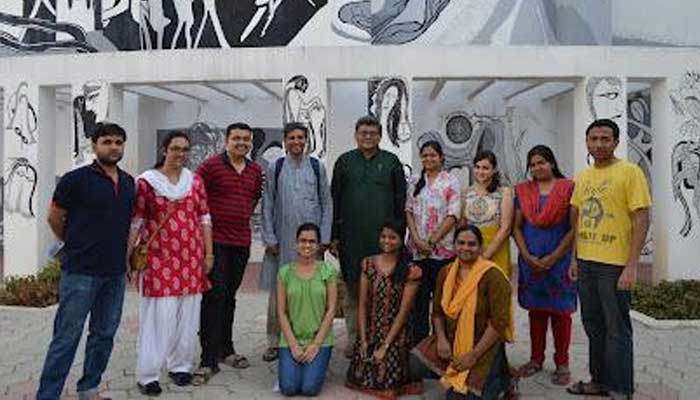
Enriching life beyond the classroom
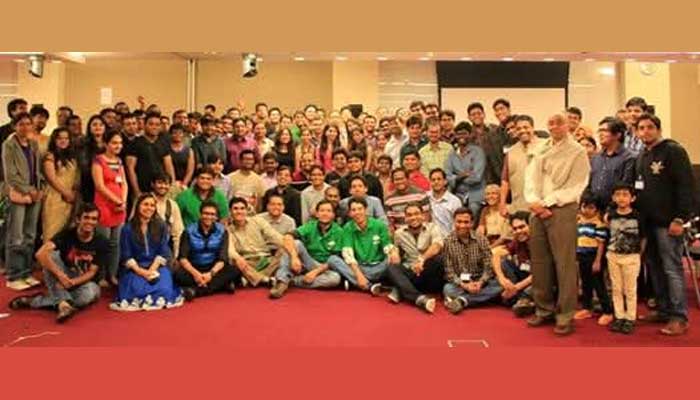
As students’ parliament representative from Agni House for three consecutive years and founding member of IIIT-H’s Alumni cell, it was a fulfilling tenure for Abhinav. “Along with fellow representatives, we pitched our idea for an alumni cell to Prof. Jayanthi Sivaswamy who was managing Alumni Affairs. A chief concern that she expressed was that past attempts on these lines took a hit when the student leading the effort graduated. While I was still there, I handed over the reins to Nazrul, who also did a good job in taking it forward. I helped organize the alumni meet at Microsoft Research in Bangalore in 2013 that received a very good response,” recalls Abhinav who featured on the Dean’s Merit List for academics in Spring 2015, and received a Special Mention for contribution towards campus activities. Some transitions that occurred during his time in IIIT-H was the inclusion of non-vegetarian food in one campus canteen and a memorable trip to Bidar in Karnataka. A favorite memory in final year was the late evening walks to Indiranagar, to de-stress during the hectic research phase. “I have been in touch with Prof. Mitra but my interactions with IIIT-H alumni has been quite irregular since most are located in the Bay Area”, he remarks.
His advice to students is to keep an open mind. “I think IIIT-H’s work is quite cutting edge as far as computational sciences is concerned. But there is a world beyond the algorithms. I would like to see more emphasis on the biomedical research aspects of life sciences. Also, we don’t have experimental biologists in our campus but it would give us an edge”.
Rochester, Covid and an unusual Ph.D tenure
During his Ph.D in Biophysics (2018 – 2024) at the University of Rochester, New York, Abhinav worked on dynamic programming based RNA secondary structure prediction algorithms. Since it coincided with the pandemic, “I basically did most of my Ph.D (2018 – 2024) remotely from my apartment”, observes the researcher who also developed online resource for disseminating nearest neighbour parameter sets for predicting nucleic acid secondary structure stability.
He was awarded the Dean’s Admission Bonus for the potential for excellence in research from the University of Rochester Medical Center in September 2018. During his short internship at CAMP4 Therapeutics at Cambridge MA in 2022, Abhinav assisted the Data Science team with oligonucleotide design and optimization that saved time spent on experiments.
He won the Metzger Award for excellence for his Ph.D thesis and for research leading to his dissertation in Biophysics in May 2025. Within the legacy software that Prof. Mathews had developed in the 1990s, which is still heavily used around the world for RNA secondary structure prediction and various other functionalities, Abhinav contributed a very technically challenging piece. “Few with my qualifications move into these areas and I think my professor was quite impressed by my efforts and skills”, explains the scholar who has presented in conferences like RiboClub at Sherbrooke, Quebec and has contributed to two articles in Current Protocols.
Killifish to the rescue
Abhinav recently moved into aging research; “something new to me but it is very fascinating. I work in a lab surrounded by experimentalists. Coming from a very different background, the challenge is in explaining myself and understanding their points of view”, he reflects. “Interestingly in aging research, I have found many age-old Indian wisdoms come to life. For example, fasting helps cells rejuvenate while exercise is a well-established way to increase health and lifespan”. The biology is very complex and to turn an insight into a therapy is a very long journey, he points out.
In aging research, since mice have a lifespan of four years, it is a very time-consuming process. They found a great alternative in African turquoise killifish, a special model organism with a four month life span that allows them to observe all the hallmarks of aging like neurodegeneration, inflammation, loss of muscles etc,. He elaborates, “I have developed an interactive transcriptome browser for it. The app uses the Dash framework and since it is hosted on Google Cloud Platform, we were awarded $5,000 in Google Cloud Research credits for the project”.
Eastman theater and the biology behind mindfulness
“My father, a computer science lecturer in a private engineering college was always supportive of my academic choices”, observes Abhinav. School trips to Delhi’s National Science Center and teachers who recognized and nurtured his interest in biology would encourage the youngster who went on to win the prestigious National Talent Search scholarship.
Fitness for Abhinav has always been long walks, that got reinforced in IIIT-H’s physically fit campus. Yoga, meditation and the simplicity of the Brahma Kumaris nourish his soul. Though not an outdoorsy person, he did travel to nearby scenic waterfalls and lakes when he lived in upstate New York.
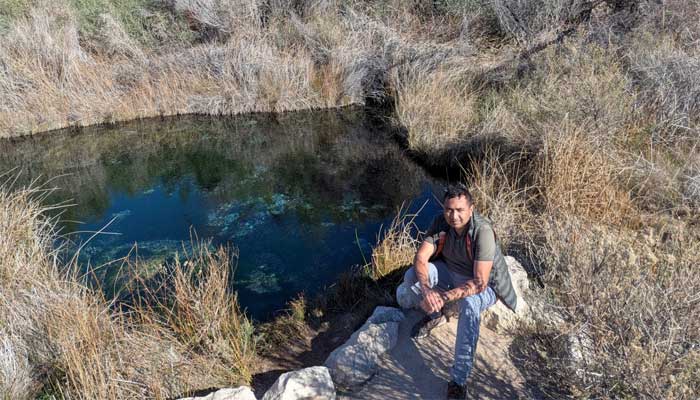
He enjoyed movies and especially old cinema at Rochester, home to the famous Dryden Theatre that regularly screens movies from George Eastman’s private collection.
Abhinav sees failures and setbacks as a part of research life. It will always be a humbling experience when you have to go back, introspect and rectify. “I have learned to be empathetic after moving into my current postdoctoral study”, asserts Abhinav whose leisure time reading includes online content on history and new developments in science. “Aging is a very complex but relevant domain”, he declares. “There are no straight answers to most questions. You can have a perfectly good diet and exercise regimen but genetics and mental stress can impact the quality and longevity of life. I am still exploring this domain and plan to continue and see where it takes me”.
Deepa Shailendra is a freelance writer for interior design publications; an irreverent blogger, consultant editor and author of two coffee table books. A social entrepreneur who believes that we are the harbingers of the transformation and can bring the change to better our world.
Next post