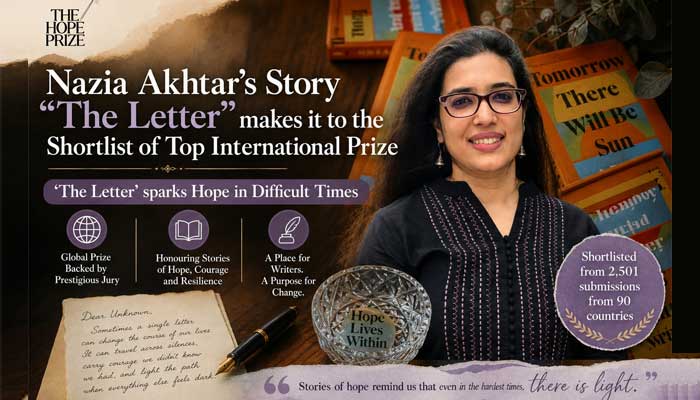
A short story by IIIT-H faculty and author Dr. Nazia Akhtar was recently shortlisted for the Hope Prize. “The Letter” will see publication in an anthology by Simon & Schuster Australia later this year. Chosen from among 2,501 submissions from 90 countries, “The Letter” marks another achievement for the young author who is credited with inaugurating a new field of study through her books Bibi’s Room and The Deccan Sun.
‘The Letter’ sparks Hope in Difficult Times
On a hot March morning in 2026, Nazia Akhtar woke up to a pleasant surprise. An email had arrived from the Hope Prize informing her that her entry had made it to the shortlist. 2,501 entries by writers from 90 countries were whittled down to the top three winners and seventeen shortlisted stories. All will feature in an anthology that will be published by Simon & Schuster Australia in October this year.
It all began in August 2025 with an Instagram post that caught her attention. “It is impossible to miss literary news when you are on social media, especially if you stay connected with writers, editors, and publishers. I had been toying with the idea of submitting an entry for the Hope Prize for months. And then I realized that I already had a story that fit the bill.”
Dr. Akhtar’s submission “The Letter” tells the story of a woman who is perceived to be a social failure. To the world, she has hit rock bottom. But she manages to find hidden reserves of hope and strength within herself. In fact, she is on the brink of doing something transformative for herself. “This is all that I can reveal. Otherwise, I will be giving you spoilers!”, she laughs.
“I must have written this short story in a matter of hours”, she recalls. “It felt like the story wanted to be told and I had been chosen to tell it. So, I entered it for the Prize to see if it had any literary merit at all.”
Global Prize Backed by Prestigious Jury
Launched in 2016 for an Australian audience, the Hope Prize was reimagined as a global short story competition in 2023, inviting international writers to share stories of hope, courage, and resilience. Over the years, the eminent panel of judges have featured public figures, such as Cate Blanchett, Kate Grenville, Dame Quentin Bryce AC CVO (former Governor-General of Australia), and more recently, Tony Birch and Julia Gillard (Australia’s first female Prime Minister). Proceeds from the anthology support the education of girls through CAMFED and other women-centred social initiatives.
For Dr. Akhtar, the recognition matters because this is among the few literary prizes in the world with a majority of women on the judging panel. The difference lies, she says, in the manner they assess submissions and interact with the public. About Julia Gillard, she explains: “While our political views and ideology may be poles apart, I admire her for her famous misogyny speech. It was a lesson in public speaking and a fantastic demonstration on how to take down patriarchy – rigorously and analytically – one step after another, chapter and verse. It felt great to be validated by a group of such women”.
Building on Bibi’s Room with Other Writings
After a PhD in Comparative Literature from the University of Western Ontario, it was Dr. Akhtar’s time as a postdoctoral fellow at the Tata Institute of Social Sciences, Hyderabad, that would open new research avenues for her. When she relocated to Hyderabad in 2013, she immersed herself in sourcing, archiving, translating, and documenting the unsung lives of Hyderabad’s remarkable Urdu women writers from the early twentieth century.
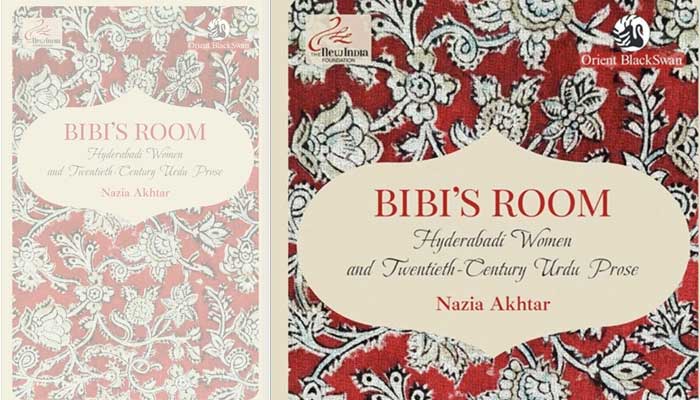
Dr. Akhtar’s first published academic manuscript was Bibi’s Room: Hyderabadi Women and Twentieth-Century Urdu Prose – a book that follows the lives and works of three accomplished Urdu women writers – Zeenath Sajida, Najma Nikhat, and Jeelani Bano. The book explores the plural culture and society of Hyderabad and the Deccan, with its shared regional histories and traditions, and features research that involved toiling through mountains of old Urdu print and often undecipherable handwritten notes.
“Bibi’s Room was appreciated both in academic circles as well as the popular publishing world,” says Dr. Akhtar. “I was grateful that seven years of unceasing work was recognized in this manner.”
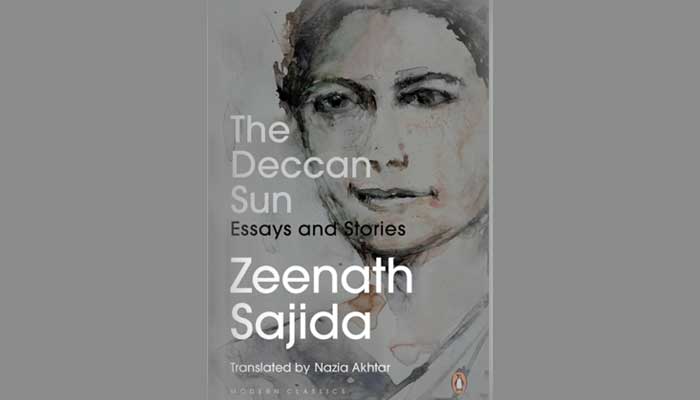
Her second book, titled The Deccan Sun, was published by Penguin Random House in 2025, and is a continuation of her translation of the essays and stories of Zeenath Sajida. When asked whether her research on these women and their lives and works has had any impact on her creative writing, she responds, “Perhaps. You see, I have spent so much time with them that I feel that they have become a part of me. Yes, there must be echoes of them somewhere in my writing. I have the same concerns and approaches to addressing them that many of them had. I think we are all connected in this way, through art and ideology.”
Current Work on the Visionary Sughra Humayun Mirza
Currently on Dr. Akhtar’s desk is a pile of books and notes that she intends to use towards a biography of Sughra Humayun Mirza, a woman who lived and worked in Hyderabad and whose influence and legacy stretch well beyond national borders. Between the early 1900s and 1950s, the much-travelled author, educator, social reformer and journalist wrote 14 novels, 6 travel accounts, and several books of stories and poetry. Dr. Akhtar also points out that Begum Sughra served as editor of a women’s magazine with a readership that extended beyond the Deccan region to Lahore, Delhi, Lucknow and Aligarh. She and her husband, Barrister Syed Humayun Mirza, were popular public speakers who travelled across Europe and Asia, delivering lectures and interacting with a vast cross-section of like-minded people.
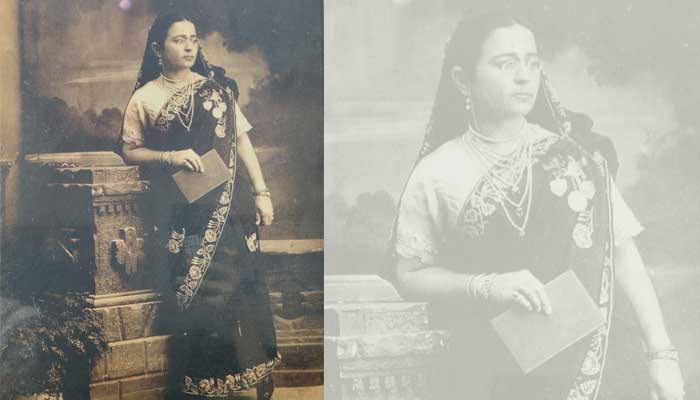
In 1934, Sughra Begum started Safdaria Girls’ School, an Urdu-medium school for girls from lower socio-economic backgrounds in the Humayunnagar part of Mehdipatnam. “It still exists as a very successful and vibrant school with talented and enthusiastic children,” observes Dr. Akhtar, who cherishes the first formal talk in Urdu that she delivered as a keynote speaker at the school’s annual celebration of Begum Sughra’s legacy in December 2025.

HSRC Sets the Tone for Archiving Hyderabad’s Neglected Literary Legacy
In an interdisciplinary exercise, Dr. Akhtar at IIIT-H’s Human Sciences Research Centre is collaborating with Prof. Kamalakar Karpalem from the Data Sciences and Analytics Center to build a textual archive of mostly handwritten Urdu-language materials and manuscripts. They are hoping to launch this website at the end of July.
Among the people who have contributed to sourcing and photographing data for the archive is PhD scholar Siddiqua Fatima, who works with Dr. Akhtar on Khoja Shia Ithna Ashari life-writing and identity. “Siddiqua’s archival and organizational skills helped us record and save fragile, easily ignored private papers and obscure manuscripts that are either not accessible online at all or are available only in parts”, notes Dr. Akhtar.
Dr. Akhtar is also a member of the Executive Editorial Board of the Journal of Urdu Studies, which in her words, represents the gold standard of research publishing in her area. She is also looking forward to volunteering in the IIITH Library Committee, which she has recently joined.
She currently teaches a core CHD course to train students in understanding and interpreting literary texts along with general electives in Indian and Russian literatures. Another core course on literary translation in workshop mode is also on the cards. “I envisage this as a course in which we will each translate a short literary text, informed by readings on the theory of translation. Who knows? Maybe something publishable will come out of this exercise for the students as well.”
Look Back to Learn How to Look Forward
Dr. Akhtar was recently awarded a seven-month Solitude residency at the Akademie Schloss in Stuttgart, Germany. She is looking forward to working on the Sughra Humayun Mirza biography and a translation of an important novel by Jeelani Bano (1936-2026), who died recently and on whom she has worked for Bibi’s Room. The fellowship covers living expenses and offers a furnished residence and project funding to pursue her writing in the quiet environs of Schloss Castle.
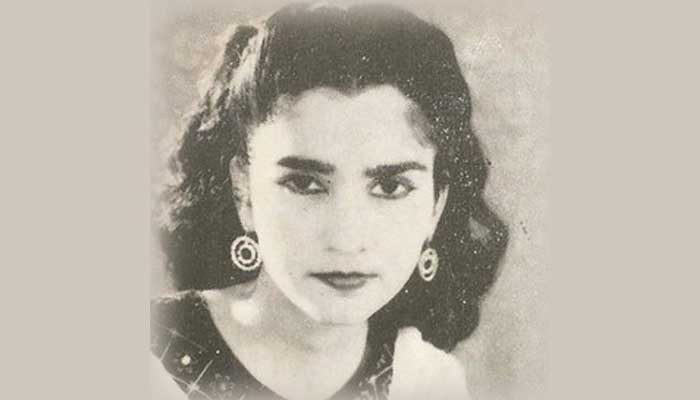
“The women writers that I work on are exciting and very surprising,” she shares. “The issues that they were discussing and writing about fifty or sixty years ago are radical even by today’s standards. The problems they were interested in solving remain relevant in our times.” On a cautionary note, she adds, “If we don’t pause to read and know about them, we would have lost a historical moment. The urgency comes from the fact that we are losing our literary and cultural heritage very quickly. I think it’s very important for people to know where they come from. Otherwise, how will we know where we are going?”
Through Dr. Nazia Akhtar’s creative and scholarly writing, the past is not merely remembered but reawakened, urging us to listen before its stories slip quietly into the silence of oblivion.
Deepa Shailendra is a freelance writer for interior design publications; an irreverent blogger, consultant editor and author of two coffee table books. A social entrepreneur who believes that we are the harbingers of the transformation and can bring the change to better our world.
Next post