
This IIIT Hyderabad Masters student has recently been named to Forbes 30 Under 30 Asia 2026 for Cognitii, his AI-powered startup operating at the intersection of education, healthcare, and assistive technology, which has built India’s first AI and human infrastructure layer for special education.
For Souvik Ghosh, a final-year MS by Research student at IIIT Hyderabad, an early morning message would forever be etched in his memory. He woke up in his Kolkata home a few weeks ago, to find his phone flooded with missed calls from co-founders, Jhillika Trisal and Falguni Shrivastava. Their startup, Cognitii, had featured in the Forbes 30 Under 30 Asia list in the Social Impact category.
The challenge wasn’t in processing the news, but explaining to his parents why it mattered. “Coming from a middle-class family, the first thing I had to do was help them understand why Forbes was such good news,” he recalls with a smile.
The AI innovation combines technology and expertise of diverse stakeholders to help schools and governments identify, support, and track at-risk special children. Months of laborious work is condensed to two weeks by equipping institutions, training educators and Anganwadi workers with real-time data and protocols.
The co-founder and CTO of Cognitii honed his entrepreneurial talents over internships and AI Consultations at start-ups like SMS Magic, Talent Sprint, Upsurge Labs, Brainbox and most of all, Sync Labs the IIIT-H incubated startup behind Wav2Lip, that ignited his interest in multimodal AI.
Circuitous route to Masters’
His path to IIIT Hyderabad was anything but conventional. From early college days using technology to protect marginalized communities, to building a start-up with the potential to transform the lives of thousands of children with developmental disabilities, Souvik Ghosh’s life has been an adventure well-lived.
During his B. Tech at Kolkata’s Heritage Institute of Technology, as a volunteer with Diksha, he became involved in initiatives addressing child and sex trafficking and women’s safety in Kolkata’s red-light district and the delta abutting the Bangladesh border.

Those experiences made him socially and technologically confident to build his first start up, AIXChange in the woman safety domain. “We developed AI-based systems that could detect harassment through CCTV footage. We also built Helpby, a mobile application designed to connect people in distress with nearby verified civilians who could provide immediate assistance. Though the idea earned grants and I built an app around it, scaling it was impossible without institutional support”.

Stumbling into research at IIIT-H
Ironically, research was never his game-plan. It was during an internship with Whilter, a Gurgaon-based startup, that Souvik came across the Wav2Lip paper, a hot topic in research circles then. The ground-breaking lip-synchronization research from IIIT Hyderabad’s CVIT lab was making waves internationally. “What fascinated me was seeing how much respect the researchers behind it had garnered”, he exclaims.
His curiosity led him to Rudrabha Mukhopadhyay and Prof. C.V. Jawahar’s research group. Unable to take the qualifying entrance examination due to financial constraints and timing issues, he joined IIIT Hyderabad through an internship route. What began as a research assistantship in 2023 was converted into an MS by Research program in 2024.
The transition was an eye opener. “I came here and realized how little I knew about AI.” Surrounded by researchers whose work underpins technologies used by millions of Indians, he discovered a new standard of excellence. “It burst my bubble in the nicest possible way”, he smiles.
Teaching machines to listen with their eyes
Souvik’s specialization lies at the frontier of multimodal AI, a field that combines information from multiple sources such as text, images, video, and sound. One IIIT-H project focuses on generating speech from silent lip movements. Another study explores visual subtitle alignment, teaching machines to synchronize subtitles with speech even when audio is unavailable.
Over the three-year tenure, seven research papers have been published or under review at leading international conferences, reports the entrepreneur whose early start-up idea bagged him the runner-up title at NASSCOM, a grant by Global Youth Mobilization and the LinkedIn Student Creator Award for his posts on AI. Now with Cognitii, the three co-founders are winning a slew of awards.
Cognitii bridges a gap
India’s special education ecosystem is fragmented. Many institutions lack standardized documentation, screening mechanisms, and support systems. Teachers often manage large numbers with limited training and resources. Cognitii seeks to bridge that gap.
Founded in 2024, the startup won a $100,000 global prize for their AI-driven platform, designed to help schools and governments to screen, support and track neuro-divergent children with ADHD, autism, dyslexia, intellectual disabilities, and other developmental challenges.
“For my co-founders, it was a lived experience because they were in the autism and ADHD spectrum from birth. They had first hand experience on the gap in the education system”, he adds.
The backdrop to the platform were scores of discussions with different stakeholders in schools, NGOs and clinical institutions across India. “On one level, we seek to translate the observations of doctors, psychologists and paediatricians to technology. Our pan-India study covers hospitals like AIIMS Delhi and Apollo Hospitals. We engage with special educators, parents, clinical psychologists and organizations like ICMR, NIMHANS. The platform creates individualized support plans, tracks developmental progress, and provides educators with AI-assisted recommendations. Importantly, the system keeps humans at the centre of decision-making while using technology to scale support. Today, the startup works with more than twenty schools and child development centres across India and is actively engaging with governments in Telangana, Andhra Pradesh, Odisha and other states.
“We aim to build a digital data infrastructure layer for these children to have a unique identity, like Aadhaar did for India. Without this data, these children will remain invisible in policy discussions,” he observes.
Cognitii has raised USD 150,000 from social innovation funders including the Government of India, Bicester Collection, Emergent Ventures, Fitch Group, NCPEDP, et al and is supported by Deloitte, HEC Paris, Seedstars and Kotak Mahindra Bank.
Balancing Two Worlds at IIIT-H
Building a startup while pursuing a research degree at IIIT-H is not for the faint-hearted. There were research deadlines, paper submissions, coursework, investor meetings, product development discussions, and government engagements, all happening simultaneously. “Honestly, I don’t know how I managed it,” he laughs.

Souvik points out that his time at IIIT Hyderabad allowed him to “explore ambitious ideas, collaborate across disciplines, and work alongside some of the brightest minds I have ever met. The culture of research, innovation, and intellectual curiosity here encouraged me to think beyond publications and products, and instead focus on building solutions that can create real-world impact.”

“When I joined IIIT-H, I realized that the kind of work that is being done here is at a level I could never imagine”, notes Souvik who has worked in the interplay of speech and video, theoretical aspects of Diffusion and Vision Language Models, with publications in premier AI venues, like InterSpeech, ICPR and ICDAR with other under review submissions. “Prof. C.V Jawahar’s honest feedback was tough but valuable. He carries a deep vision. My supervisor, Prof. Vinay Namboodiri from University of Bath was always very supportive and helpful. I took project in most of my courses and worked with Prof. Vineet Gandhi in SMAI, Prof. Bapi Reddy in Cogsci and AI, Prof. Anoop Namboodiri in DIP, Prof. Ramesh Loganathan, Prof. Prakash Yalla and Satish Kathirisetti in Technology Product and Entrepreneurship.
“I was privileged to be born in South Kolkata in a very middle-class family to parents who ensured that my sister and I got a strong educational base at National Gems and Heritage. I got a fully funded scholarship in high school and continued my studies with education loan during my B Tech.”, he observes.
For Souvik, early speech problems in his childhood went undiagnosed and he had to face a lot of bullying at school. “Maybe that’s one reason this work matters so much to me, because I understand how not being included in a system feels like”, he mulls.
Travel – his antidote for stressful deadlines
When a paper is rejected or stress mounts, Souvik packs a bag and hits the road. For him, travel is education. In the middle of nowhere, fresh perspectives come to him. Over the past two years, he has explored over twenty travel destinations across India, with friends, family and solo trips. “I love mountains the most, especially the different hues of Himachal”, he admits.
Whether speaking with villagers in remote mountain communities or sharing stories with strangers beside a waterfall, he finds lessons everywhere. “Changing your location changes your perspective,” he muses. “You realise that many things we worry about aren’t as important as we think.”

With his thesis nearing completion, the next chapter is already taking shape. The immediate goal is scaling Cognitii across India and deepening collaborations with schools and governments. Beyond that, he hopes to continue contributing to AI research while building technologies that address real-world challenges. Whether he is teaching machines to understand speech from silent lips or helping educators understand neuro-divergent children, his mission is making invisible voices heard.
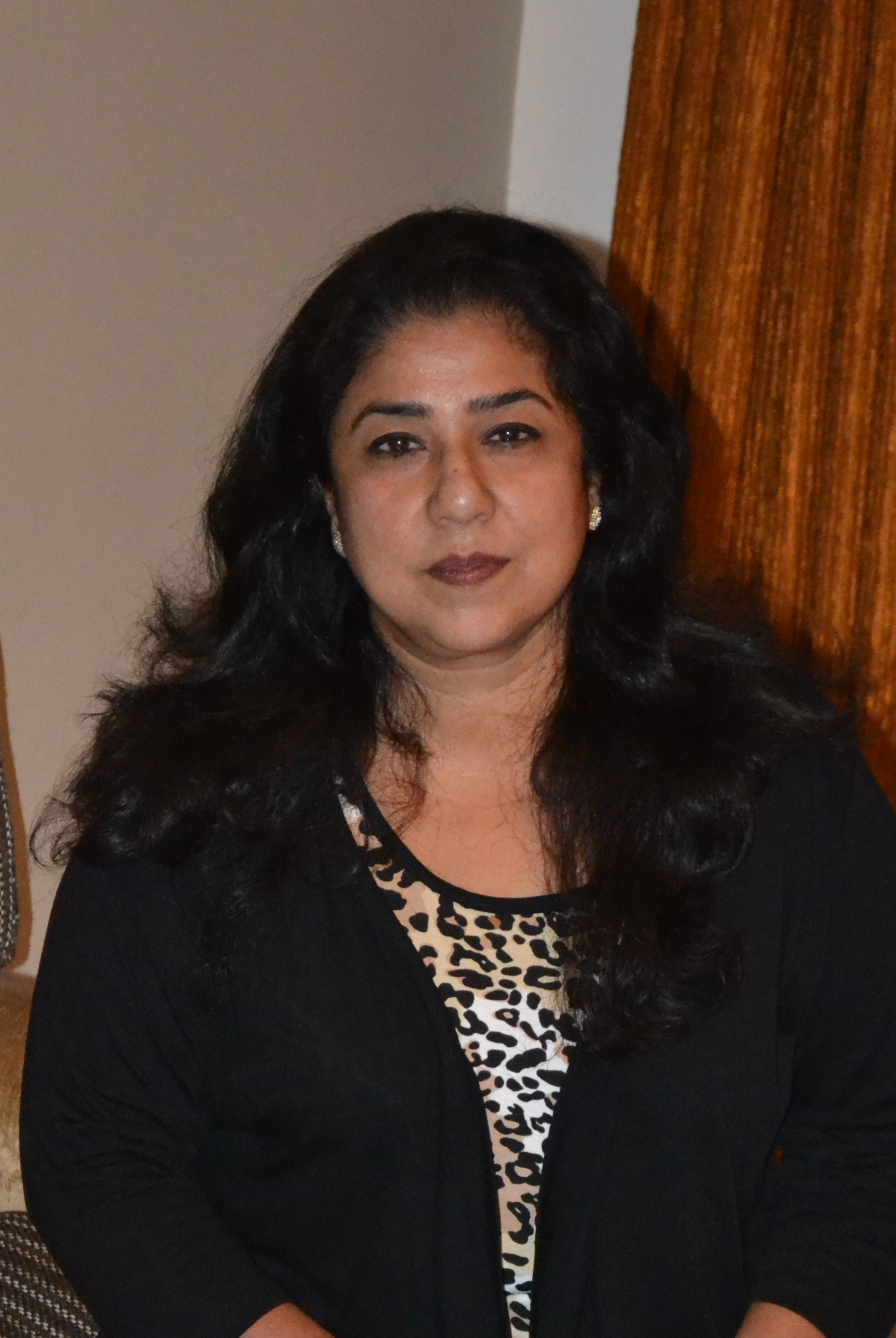
Deepa Shailendra is a freelance writer for interior design publications; an irreverent blogger, consultant editor and author of two coffee table books. A social entrepreneur who believes that we are the harbingers of the transformation and can bring the change to better our world.
Next post