
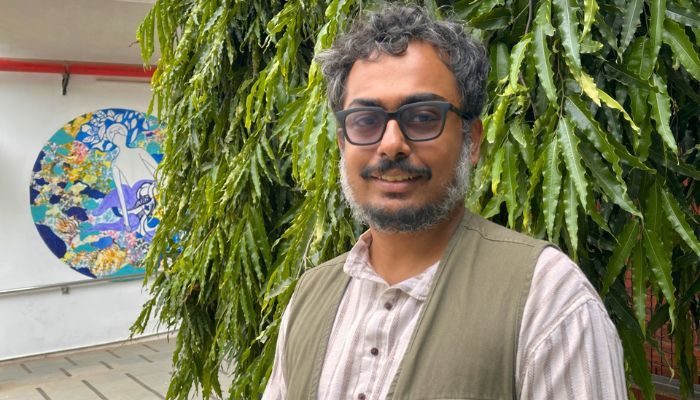
The former ecologist-in-training Prof. Rajorshi Ray explains why the platform economy is about more than just food delivery and ride-hailing apps, and how a new book he has co-authored is a good starting point for a deep dive.
Mention “platform economy” and Uber, Swiggy and Ola spring to mind. But Aadhaar and CoWIN, the platform behind India’s COVID-19 vaccination drive? For Prof. Rajorshi Ray, the latter also merit inclusion in the same conversation as the ride-hailing apps, and understanding why is the starting point of his new book.
The Assistant Professor at the Human Sciences Research Center, IIIT Hyderabad, argues that the platform economy is not fundamentally about start-ups, profit or gig workers. Broadly put, it is about the systems through which information, money and services move; and the relationships that grow around them. An Introduction to Platform Economy in India: Exploring Relationality and Embeddedness, co-authored with Jillet Sarah Sam and Shriram Venkatraman and published by Emerald Publishing, makes that case.
“Economy doesn’t always mean it has to be profit-generating,” Prof. Ray says. “Economy here means where there is a continuous transaction and flow of information, capital, labour, and services.” It is this idea that carries the platform economy out of the familiar world of ride-hailing and food delivery and into the less obvious territory of governance, welfare and public infrastructure. It is a fitting perspective for the researcher whose own path has been anything but linear.
From Ecology to the Social World
Prof. Ray began in the sciences, training in Environmental Sciences at the Forest Research Institute in Dehradun.. Drawn to ecology and wildlife conservation – his favourite animals are elephants and leopards – he seriously considered a PhD at the Indian Institute of Science, Bengaluru. It was while thinking about environmental problems that he realised these are not only problems of forests and species; they are equally problems of human behaviour, institutions and economic systems. “A lot of the problems we were trying to solve, such as ecological problems, sustainability, climate change, rest very much within the realm of the social and the human,” he says. That realisation pulled him towards sociology.

The shift raised a chain of questions for him, about how human societies are organised in the wake of ecological crises and how economies shape the lives that people can lead. “The economy in itself is quite an important determinant of how a human survives in this place,” he says. In fact, the question of how human survival has come to underpin all his research and teaching today.
When Prof. Ray joined IIT Kanpur for his PhD in sociology, he intended to stay with the environment – environmental sociology, perhaps, or environmental economics. But his coursework nudged him towards larger questions about the economy as a structure: for instance, how a government decides where to spend, which parts of healthcare to privatise, what to keep within the welfare system. Meanwhile, everyday life was transforming around him. “It was around 2017,” he recalls. Ola and Uber were becoming ubiquitous, food-delivery platforms were expanding, and people were increasingly participating within this economy through apps. For a young researcher, it raised urgent questions about labour: What did platform work mean for workers’ rights? What happened to the dignity of labour when people were classified as independent contractors rather than employees?
One of the first papers on gig work in the Global South that Prof. Ray read was by Prof. Nimmi Rangaswamy of IIIT-H. “She is a pioneer of this work in India,” he says. His own research soon moved past the obvious relationship between platform and worker to look at what surrounds the worker. No gig worker is an island, and none lives on an app. There are rents to pay, loans to repay, school fees, medical emergencies to prepare for, perhaps money owed to family in the village. “What happens when the platform doesn’t pay enough to cover all of these? The answer often lies in the people around the worker. The wife may pawn her gold, relatives may lend money, friends and fellow workers may provide other support.” The entire social world around the worker, he found, was helping the gig work happen.
The Gig Worker’s Invisible Infrastructure
This became a central insight of Prof. Ray’s fieldwork among gig workers in Kolkata and Kanpur. A platform may supply the app, the algorithm and the work, but the infrastructure that keeps the worker going often comes from elsewhere. When a delivery worker is involved in an accident, the platform may care more about getting the food delivered than about the injured worker. The worker turns instead to a WhatsApp group of fellow riders.
“These groups are much more than social spaces,” Prof. Ray explains, “They function as informal information systems.” Workers trade intelligence on shifting platform rules, payments, incentives and customer complaints; they flag accidents and road hazards and ask for help. A driver learns when trains and flights arrive and positions himself at the station or airport accordingly. Over time, the professor notes, “They build up a shared understanding of where and when work is likely to be available.”
Human beings, in other words, are part of the infrastructure. “They not only build and sustain the infrastructure, but they are also a vital part of it.” This is the idea of embeddedness that runs through his work: a platform may look like a purely technological system, but it is deeply embedded in relationships such as family, friends, fellow workers, institutions and the state.
More Than Just Uber
For the young professor, the book grew out of a wish to offer a broader account of all this. Jillet Sarah Sam, an economic sociologist at IIT Kanpur, was Prof. Ray’s PhD supervisor; Shriram Venkatraman is an Assistant Professor at the University of Southern Denmark and a Fellow of the Danish Institute for Advanced Study. The three began collaborating during the pandemic, examining the role of online networks in gig workers’ lives. Much existing discussion, they felt, focused on the precarity of gig work and the power of technology companies. While those questions remain important, the authors wanted to look across sectors and ask how the platforms are transforming society more broadly.
The book examines platformisation across labour, finance, mobility, health, education, e-commerce, entrepreneurship, policy and governance. Rather than writing for specialists, the authors have aimed it at undergraduates, early-stage MBA students and anyone trying to understand the systems now shaping daily life. “It is deliberately written in simple language to make it accessible for everyone,” elaborates Prof. Ray. The introductory book asks what platforms are, how they work, and what happens when social and economic activity is reorganised through digital systems. “It is here that the definition of the platform economy widens,” he asserts.
Not Necessarily Profit-Making, Not Necessarily Fair
CoWIN and Aadhaar look nothing like Uber or Swiggy, yet they share a defining feature: they organise flows of information, services and transactions through digital infrastructure. Prof. Ray calls this the platformisation of governance. “When the state feels that part of its work would be better delivered if it is intermediated through digital artifacts, tools and services, that becomes part of platformisation,” he explains. The question is no longer which company owns the app, but what the platform does. For him, the more important questions are what flows through it, the relationships it reorganises, who gains access, who is excluded, and which existing systems of power hierarchy it challenges or leaves untouched?
Years of research have also disproved some comfortable assumptions. For instance, the belief that digital systems make processes more efficient, objective and less dependent on individual discretion. “Technology does not automatically erase inequality,” Prof. Ray asserts. “Take microfinance. Traditionally, a lending agent might visit a village and assess a borrower. The idea with digital platforms is that it reduces human bias because decisions may increasingly be made through credit scores and automated systems. But in reality, a low credit score might still exclude someone without understanding the context of borrowers. Existing inequalities are simply translated into a digital system.”
According to the professor, the same holds for welfare. Direct benefit transfers were designed to cut leakages and get money to beneficiaries directly. But now technology has entered societies that already carry their own relations of power. “Technology may alter the process; it does not automatically transform the society around it”, he says.
Redefining the Gig Worker
Prof. Ray’s research also unsettles the way gig workers are usually described. Typecast as unskilled people doing precarious work, he argues that gig workers’ innate knowledge of the city maps, the skill and dexterity to synchronise platforms’ requirements, customer demands, and expectations of law enforcement agencies, constitutes highly skilled work. Additionally, he draws our attention to the way workers repurpose existing infrastructure in the absence of such support from the State or the platforms. “When it rains, where do they wait? Under flyovers! Similarly, between deliveries, they may use public spaces in ways they were never designed for.”
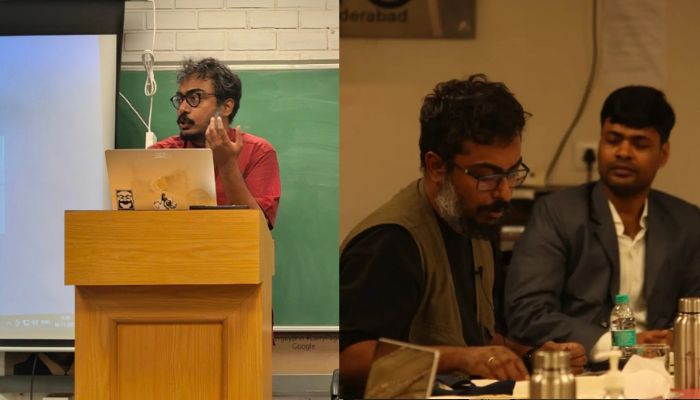
There is an aspirational dimension, too. Gig work may be labelled a “necessary economy,” taken up for lack of alternatives, but necessity is not the absence of ambition. “A driver may want to own a car rather than rent one. A worker may want to give their children a better education, or build a more secure future. The aspiration is real, but the path to it is uncertain.”
The Common Thread
It may appear that Prof. Ray has hopscotched his way across a gamut of subjects before landing at the Human Sciences Research Centre at IIIT-H: from elephants and climate change, to Uber, Aadhaar and algorithms. But beneath them runs the same question: How do people make a life within systems that are larger than themselves and often oppressive? The answer, his work suggests, is rarely found in the system alone. In the end, the platform economy is not just about apps. It is about the society that builds them, uses them, adapts to them – and sometimes quietly keeps them running.
As for Prof. Ray himself, the natural world remains close to his heart. He still hikes in national parks, birdwatches, and hopes to return to ecological research one day.
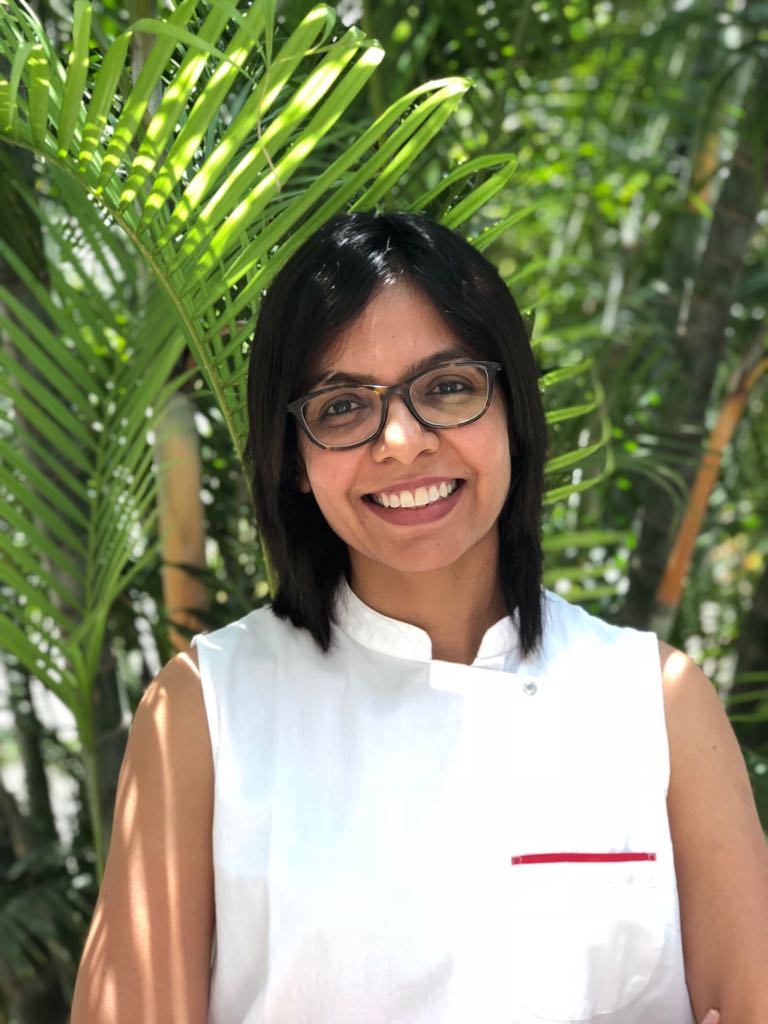
Sarita Chebbi is a compulsive early riser. Devourer of all news. Kettlebell enthusiast. Nit-picker of the written word especially when it’s not her own.
Next post