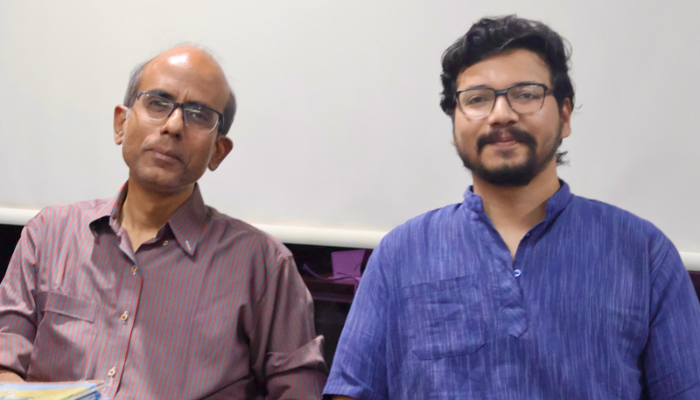
Pranjal Paul, 5th year PhD student in Computer Science has been selected for a Google PhD Fellowship program in the Machine Learning and ML Foundations category. While his research questions are interesting enough, the backstory of his PhD journey also makes for a compelling read.
Pranjal Paul, from the Robotics Research Center, IIIT-H is a recipient of the 2026 Google PhD Fellowship Program with support from Google.org. The Google PhD Fellowship Program recognizes outstanding graduate students who are conducting exceptional and innovative research in computer science and related fields, specifically focusing on “early-career scientists who are advancing the science of AI for the public good”. Pranjal joins a cohort of 148 new Fellows, supported by $13 million from Google.org. Each Fellow receives funding for their doctoral research, access to engage with Google researchers and joins a global community of peers. “I’m ecstatic to learn that I’m one among 148 new fellows across 38 countries, including 9 fellows from institutions in India. It is particularly special to discover that I’m the 5th researcher from IIIT-H to receive this fellowship since the program’s inception in 2009,” says Pranjal.
Working under the supervision of Prof. Madhava Krishna, Head, RRC and co-advised by Prof. Arun Kumar Singh, Pranjal is exploring ways to make autonomous systems more reliable by bringing together the learning capabilities of neural networks and the mathematical rigour of constraints. Very simply put, he says that the aim is to determine how the vehicle should steer, accelerate, or brake so that it stays on the road, respects traffic rules, avoids obstacles, and navigates safely while given camera observations. “That’s pretty much the objective of autonomous driving and typically, self-driving is approached by imitating human driving. My research asks whether we can incorporate driving rules directly into the way the system learns and makes decisions”.
Pranjal’s personal homepage begins with an important observation, “Full self-driving is amazing, until it isn’t” capturing a critical challenge in autonomous systems that thousands of correct decisions can go unnoticed, but one wrong decision can have serious consequences. “Even a system that succeeds in 99.9% of individual driving scenarios has only about a 36.8% probability of navigating 1,000 independent scenarios without a single failure,” he explains. For Pranjal, closing this reliability gap is what makes the research particularly exciting.
An Accidental Researcher
The Google Fellowship is a recognition of exceptional research work but what if we told you that Pranjal’s foray into the PhD program was entirely accidental and has a rather “unglamorous backstory” (his words). It all began with him having heard outstanding things about IIIT-H’s research culture. Intending, then, to pursue a Masters By Research, Pranjal appeared for the PGEE (post graduate entrance exam). However due to an unexpected turn of events during the admissions process, he faced the only option of signing up for a PhD. “I was genuinely shaken because a PhD was a commitment I hadn’t planned for, and suddenly I found myself contemplating a rather different future,” he recollects. Around the same time, he was also a participant at IIIT-H’s Computer Vision Summer School. Attending the summer school gave him a closer look at the research environment and its faculty and proved to be a turning point. A conversation with fellow participant Dr. Parikshit Vishwas, Co-founder and VP of Imaging & AI at DreamVu AI and a IIIT-H alumnus, helped him view the opportunity of pursuing a PhD very differently. “He reassured me that pursuing a PhD at IIIT-H was a decision I was unlikely to regret”.
Route To RRC
Robotics may not have been an obvious choice for Pranjal, but according to him, pursuing an Engineering degree was never really a dilemma. “I’ve always had immense respect for skilled engineers who truly understand their craft. But my fascination started when I learned programming in school, around 2012-14, when I took C++ as an elective. In hindsight, my school deserves considerable credit for nurturing that interest,” he narrates, as explanation behind the choices that led him to where he is today. During his undergrad years (2014-18), his curiosity gradually evolved from writing software-level code to understanding how it can interact with hardware. He began by exploring embedded systems, the Internet of Things (IoT), and assembly-level programming through course projects. “Robotics eventually emerged as a natural intersection of these interests,” he says.
Labelling his early and “first real exposure” to robotics research at RRC as overwhelming, Pranjal says, “There’s quite a difference between building something that works and pursuing research that advances what is already known.” For him, a defining moment in his PhD journey was the opportunity to collaborate with Prof. Arun Kumar Singh, RRC’s first PhD graduate who is now a professor at the University of Tartu, Estonia. That collaboration introduced him to a different level of mathematical thinking and technical curiosity. “I consider him (Prof. Singh) and my PhD advisor, Prof. Madhava Krishna, two of the most influential people in shaping my research career”. Looking back as an advisor, Prof. Krishna agrees that Pranjal has evolved as a student and researcher. “The transformation has been unbelievable. Pranjal did not start his PhD demonstrating these traits. He was hesitant and unsure in the early days, but somewhere along the line there was this transformation. It was both gradual and yet sudden and I attribute it entirely to his work ethic.”
Mentor-Mentee Dynamics
Much of a researcher’s progress, career prospects and mental well-being depends on the rapport they share with their advisor. In Pranjal’s case, Prof. Madhava Krishna is, in many ways, the kind of advisor every PhD student hopes to have. “A PhD is as much an intellectual journey as it is a test of patience, resilience, and self-belief. Having an advisor who understands all three makes an extraordinary difference,” explains Pranjal. Valuing the professor’s approachability, intellectual openness, and professionalism, Pranjal says that their conversations are remarkably candid. “I can discuss almost anything with him, from intricate technical problems and research disagreements to broader questions about career choices and life. Additionally, his background and interest in Vedanta also lend a rather distinctive philosophical dimension to how he approaches problems.” It is these (often unexpected) perspectives that Prof. Krishna brings to a discussion that prompt him to reconsider assumptions. “He brings an unusual combination of creativity, intuition, and mathematical depth to research discussions,” gushes Pranjal, clarifying quickly though that the professor is not an easy person to impress. “One needs to be absolutely clear about the fundamentals, intellectually honest about an idea’s limitations, and prepared to defend every assumption. Vague reasoning rarely survives a discussion with him!”
The admiration seems to be mutual because Prof. Krishna calls Pranjal, “the quintessential student every advisor seeks to have. Analytical, curious, an unmatchable professional work ethic, always ready to discuss and be challenged, he brings a clarity to difficult problems that I have not often come across. I have been blessed to have PhD students like him; indeed, all my previous PhD students too were gifted in their own ways,” muses Prof. Krishna.
Beyond PhD
Receiving the Google Fellowship has not been the first of such achievements for Pranjal. Early this year, he was recognised by Amazon AI India as one of the top 100 PhD researchers in the country in AI/ML. As a 5th year researcher, Pranjal is considering his next steps post-PhD. “Given the remarkable pace at which robotics research is evolving, I would like to spend the next few years in an industrial research environment. In the longer term, I aspire to pursue postdoctoral research opportunities at leading international labs, ideally across different research groups and institutions. I find the prospect of working with different scientific communities, learning their approaches, and broadening my research perspective particularly exciting,” he says, adding that the ultimate goal is to build a career “where I can move comfortably between fundamental research and meaningful real-world impact.” Looking back at his journey so far, he says, “Getting into a PhD was somewhat accidental. Staying, persevering, and growing into a researcher were entirely deliberate choices. And I wouldn’t trade that journey for anything.”
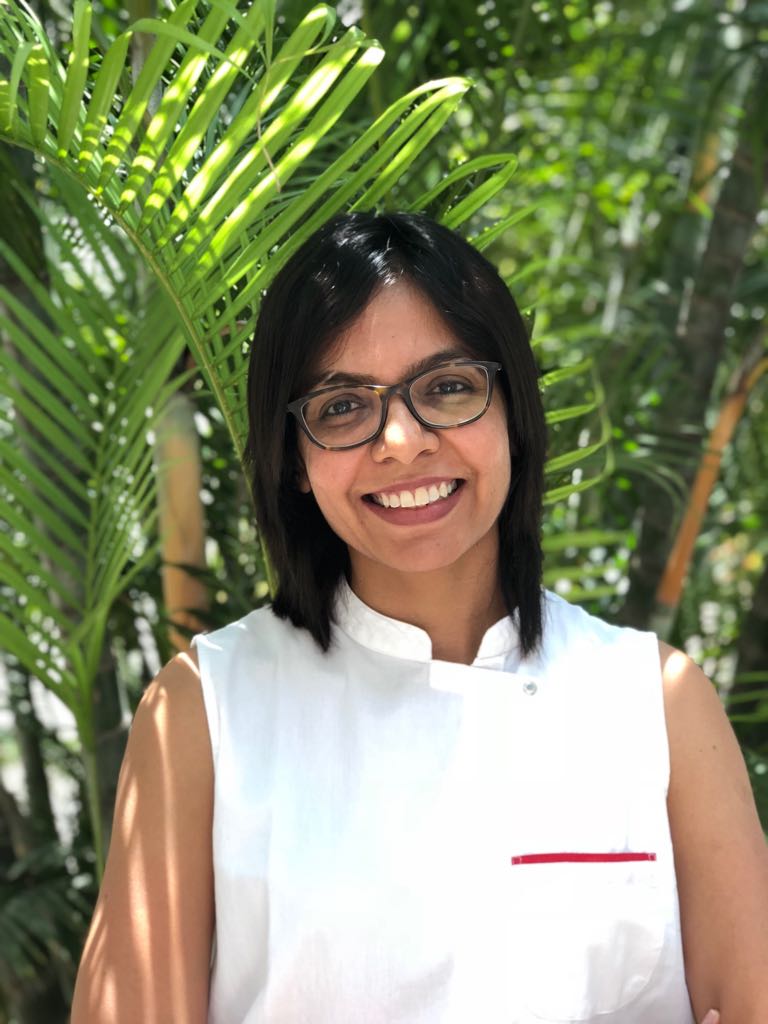
Sarita Chebbi is a compulsive early riser. Devourer of all news. Kettlebell enthusiast. Nit-picker of the written word especially when it’s not her own.
Next post