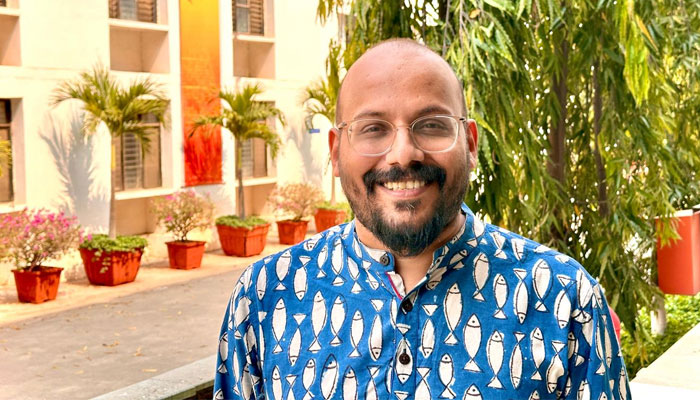
Urbanization expert Dr. Khaliq Parkar, Assistant Professor at IIIT Hyderabad’s Human Sciences Research Centre, makes a strong case for Urban Studies, offering the social perspective to help shape digitalization practices in governance, policies of digitization in Smart Cities including the design of smart Infrastructures.
Dr. Khaliq Parkar brings twelve years of global research and academic rigor to his study of urbanization. With a Ph. D from CESSMA, University of Paris Cité, on the digitalization of urban governance in India, the well-read, widely travelled scholar interspersed his academic journey with teaching stints at Mumbai’s St. Xavier’s College, Wilson College, NMIMS University and Symbiosis International University, Pune.
Following the Smart Cities Mission and National Urban Digital Mission, he used the case study of Bhubaneswar, to identify transformations arising from the introduction of platforms, installation of digital infrastructure, and a turn towards data-driven governance. Khaliq’s doctoral research was awarded the Grant for a Southern Thesis, from the French National Research Institute for Sustainable Development (IRD) and a fellowship from the Weizenbaum Institut, Berlin.
Apart from getting lost in a Meghalaya Cave that was converted into a podcast, what makes the scholar’s journey interesting are his diverse interests in heritage walks, printmaking, film archiving and photography. An expert in his craft, his exploration of the world through walks in cities and other inhabited spaces feature in his interesting Digital City course at IIIT Hyderabad.
Train rides give a panoramic perspective
Urbanization and digitalization chose Khaliq Parkar.
“My fascination with cities began when my parents moved to Bombay in the 1980s, to provide us with a better launching pad. I grew up in the suburbs of the North but attended the elite St. Xavier’s College in South Bombay for my B.A. (Hons). That daily train commute unfolded the entire spectrum of cultural-research avenues and academic spaces that got me interested in cities”.
The thinker who always had his sights set on social sciences, zoned in on classical subjects like English literature, political science and history at the undergraduate level. Somewhere between internships, research projects and faculty positions, Khaliq realized that the questions of technology, urbanization and cities intrigued him.
For his M.A- M. Phil research at JNU’s Centre for Political Studies, he studied government, democracy, public participation and how community, political leaders and NGOs work. “One insight that I love to share is when I was studying the forests of Maharashtra and Madhya Pradesh. I found Madhya Pradesh forests were better managed because the government gave powers to local villages and tribes, while Maharashtra tried to run things from Bombay”.
“In the early years, I sought to study this new world; like how a traffic gridlock can be solved by the round-robin algorithm. I was talking to experts, technologists and government officials, to understand what technology means to citizens”, says the former research consultant with the UNFPA and the Centre for Policy Research, New Delhi.
“Having lived in techno-centric metros from Bombay to Berlin for over twenty years, I have wandered through cities, discovering hidden gems and untold stories. As the youngest child, growing up in the 1980s, I stood in long queues to pay a utility bill, that is now done in seconds, finger-dancing on a keyboard. The digital trajectory changed since liberalization and thus began my interest in looking purely at technology and its implications for governance, for my Ph.D”.
Ah Paris!
Five days before the world shut for the pandemic in March 2020, Khaliq moved to Paris for his Ph.D in geography. A city seen through movies and books, was now viewed through the lens of a researcher and he enjoyed the refreshingly enriching experience.
“My doctoral research in human geography looked at the transformations that technology brings to the governance of cities. When he started his Ph.D, the Smart Cities program had just been launched and India was already undergoing dramatic changes around UPI and Aadhaar.
“In my final year, while looking for Institutes to continue my research in technology and society, I found that IIIT Hyderabad had a smart cities lab and was collaborating with the Indian Urban Data Exchange. It was fascinating to see an educational institution closely linked to government and technology, located in one of the fastest growing IT cities globally. It was my first job application and this is how I landed up at IIIT Hyderabad”, smiles Khaliq.
Social science as an aid to improve tech apps
“At HSRC, I teach students who will create technology for governance in the future. We show them how to decode social cues, learn from the city on how to make that product or tool more efficient, or work with data better”.
The perception of Hyderabad as an IT city evokes images of a glitzy Hitech city and its neatly ordered apartment enclaves. But that study should also consider Gowlidoddi, where entry-level workers live in crowded neighborhoods, the chaos of Old city, the planned parts of Secunderabad and the proposed Future city, AI city, Pharma city or Genome city.
Hyderabad has absorbed all its precincts and turned into one giant municipality and is now being bifurcated into three units. How do you administer a territory like this? How will citizens’ access to services change? “Recently, we were part of an initiative to help GHMC understand how citizens’ apps can be addressed better and the reasons why complaints on the MyGHMC official app was getting stuck”.

Making sense of traffic chaos and Trash collection
“Whether technologists are stream-lining traffic with an algorithm, designing a grievance system for citizens or a smart app for waste collectors to scan QR codes of households visited, I realized that many technology solutions do not account for human behavior and logistical problems. This is precisely why social scientists need to work together with technologists to design systems”, says Khaliq. “At IIIT-H, technologists and social scientists work together but look at the topic from different angles. This kind of confluence happens very rarely in India”.
IIIT-H looks at Tech through social lens
IIIT-H recently hosted Tech Forward, a research seminar that looked at AI in urban infra. In the run-up to the International AI Summit at New Delhi, IIIT-H organized a government approved Pre-summit event, with Bordeaux, partner city of Hyderabad. Bordeaux Métropole, France and the Telangana government will be collaborating on several projects in heritage conservation and sustainable urban development.
Enjoying IIIT-H’s connected networks
“The IIIT-H campus is a city of its own, a beautiful, solitary space and I enjoy walking around in the greenery, as I prepare for class. I appreciate the fact that the minute you have questions around technology or wish to talk to somebody within the industry, or government, IIIT-H opens the doors for you. I find this instant access to information and knowledge quite fascinating”, says the scholar.
An avid writer, Khaliq’s academic writings on the smart cities program, travel, movies and book reviews have been published in Caravan, Scroll, Indian Express and the Economic and political weekly. He has co- edited a special issue on ‘Urban governance and digitalization in India’ for Samaj and for a publication on Surveillance and technology in India. He has contributed two book chapters on democracy and co-edited a book on Smart cities in India, slated for publication this year.
Printmaking and all that jazz
Khaliq unwinds with reading, photography and print making. “Print making is a fascinating three-stage art form that I came across in a museum thirteen years ago. I have a small series on jazz artists on Instagram that I make for my wife since we both love jazz”.

The FTII Pune campus was a favorite hangout for the movie buff, who worked briefly with Katha Center for Film Studies and helped organize film festivals. “As an undergraduate student, I curated heritage walks on the historical highpoints of Bombay. I took Shabana Azmi, Javed Akhtar and members of the Asiatic Society on my inaugural walk, exploring the first settlements and earliest neighborhoods in the Fort area. I maintain film archives and hope to screen my favorite films for my students one day”, say Khaliq who constantly rewatches Werner Herzog and Denis Villeneuve movies, owns five film cameras and plans to hold an analog photography workshop someday.

From classical literature in college, today his reading leans towards Indian authors like Irwin Allan Sealy and international authors Jorge Luis Borges, John Kennedy Toole and Vladimir Nabokov. Once a half marathon runner, today walking is a favored pastime and source for many stories; discovering a Rimbaud poem on an alley wall or that 4000 kilometer motorcycle trip to Kibithu village on the China border.

While he inherited his creative skills from his mother, it was from his zoologist-father, that he acquired that adventurous streak, going on forest walks during his summer vacations in different jungles of India. “Long before drones were used for urban security, Indian farmers were using drones to inspect the far corners of their fields”, observes Dr. Khaliq Parkar who predicts that his possible future trajectory will be towards exploring technology and governance of agriculture and labor in India.
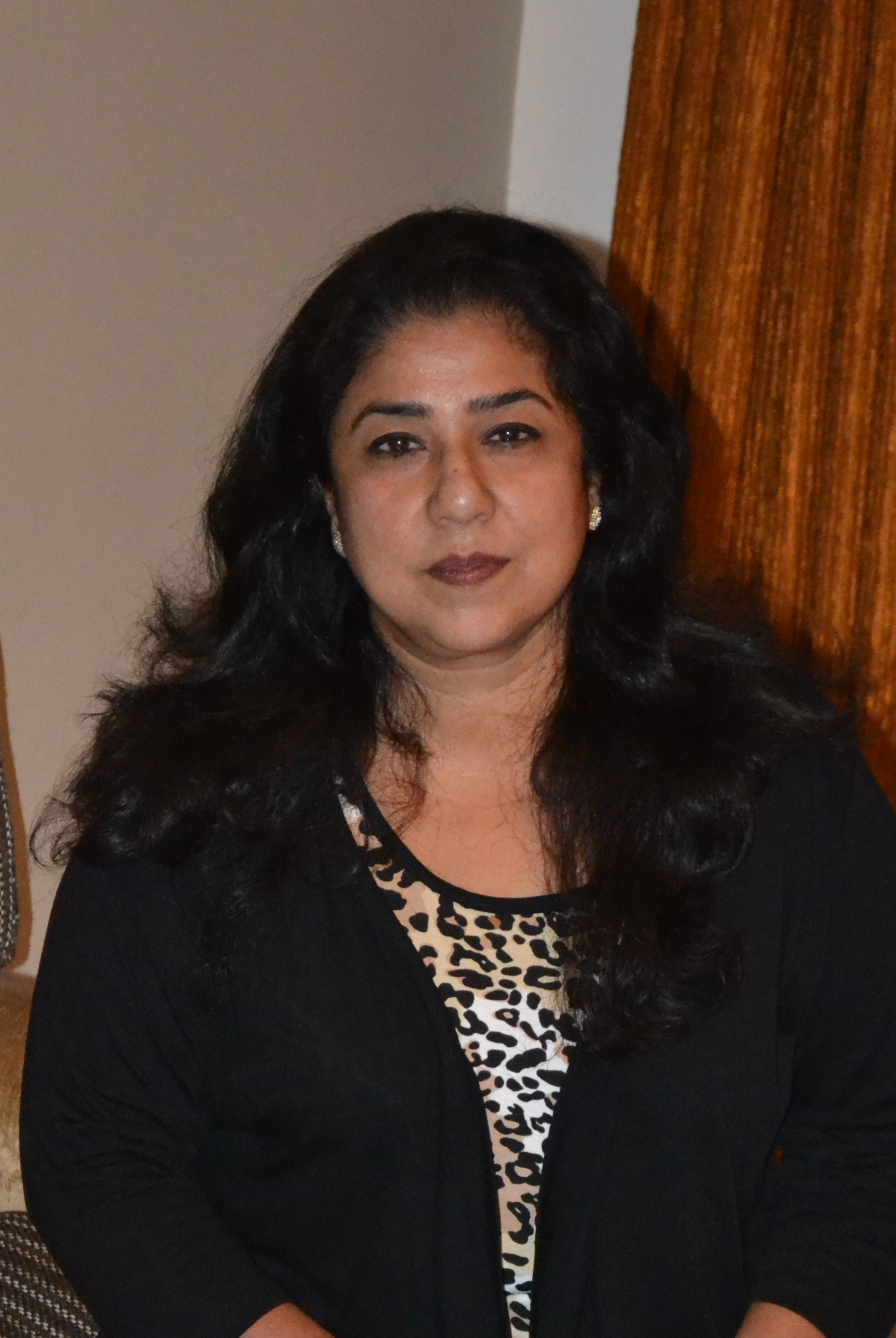
Deepa Shailendra is a freelance writer for interior design publications; an irreverent blogger, consultant editor and author of two coffee table books. A social entrepreneur who believes that we are the harbingers of the transformation and can bring the change to better our world.
Such a fascinating range of interests! I definitely share an obsession for Nabokov’s prose!
Nimmi Rangaswamy says:Superb 👌
Jyothi Choora says: