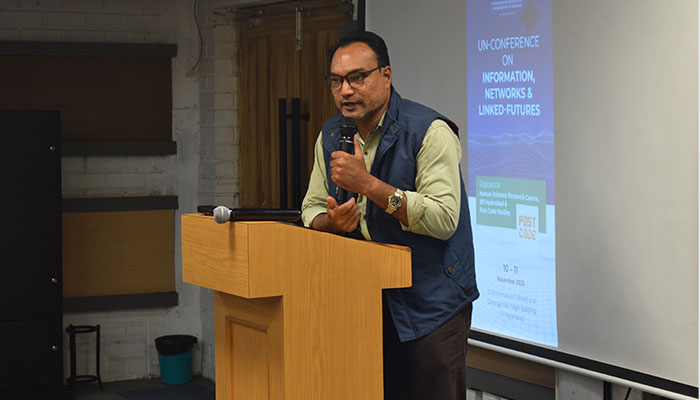
The Human Sciences Research Center at IIIT Hyderabad, in collaboration with Post Code Studios, hosted a two-day un-conference on Information, Networks and Linked Futures on 10 and 11 November. The event brought together an interdisciplinary community of technologists, policymakers, artists, lawyers, ecologists, activists, and researchers. Designed as an alternative to traditional conference structures, the event emphasized participatory dialogue, collaborative problem-solving, and shared ownership of ideas, reflecting its central belief that the future is fundamentally interconnected.
Participants explored the increasingly entwined challenges of design thinking, privacy, digital infrastructures, ecological thinking, artificial intelligence, labour, and climate change. The sessions underscored that issues of governance, creativity, sustainability, and social justice can no longer be understood in silos; instead, they form a complex network of influences shaping contemporary and future societies.
Day 1 Highlights – 10 November
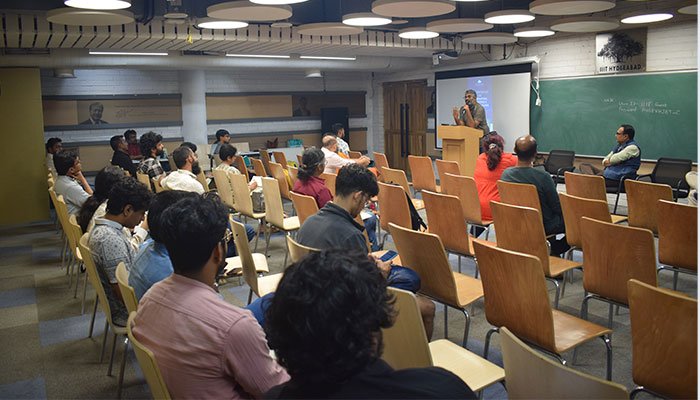
The un-conference opened with an introduction by Rajorshi Ray, setting the tone for two days of immersive exploration. Morning sessions examined how India’s Digital Personal Data Protection reshapes the landscape of transparency and accountability, featuring insights from Rakesh Dubbudu, FACTLY and S Q Masood, ASEEM. Their discussion shed light on the shifting balance between the public’s right to information and the imperatives of personal privacy in an era of expanding digital governance.
A session led by Srinivas Kodali, Postcode Studio introduced ecological approaches to cybernetics and complex systems, bridging digital and natural networks. This theme was further developed with Venkat Anagandhula’s presentation on mycelium and mycorrhizal networks, which highlighted the biological architectures that inspire alternative materials, circular systems, and even legal frameworks.
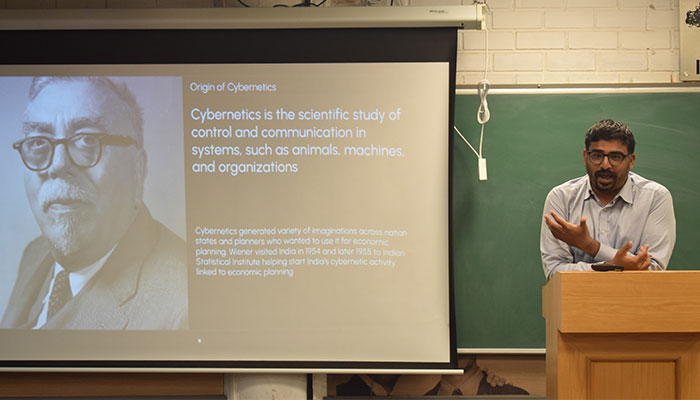
The post-lunch programming brought design and technology into conversation. Padmini Ray Murray, Design Beku contrasted systems thinking with design thinking, while Appupen, George Mathen offered a powerful reflection on the evolving relationship between art and AI, raising questions about authenticity, authorship, creativity, and machine-mediated futures.
Day 2 Highlights – 11 November
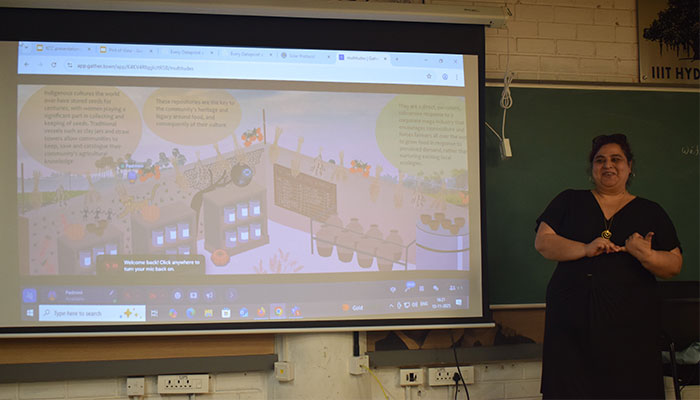
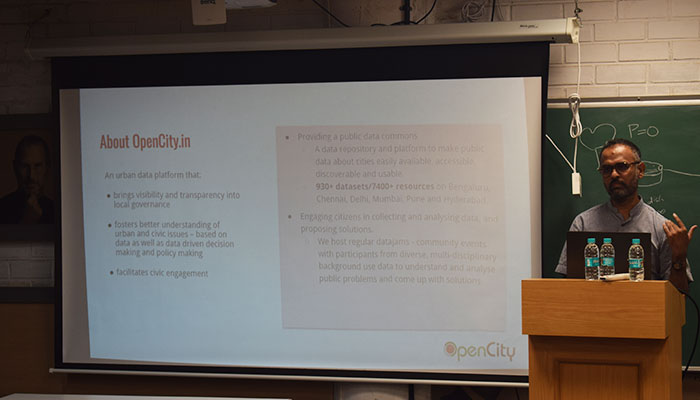
Hands-on learning defined the second day. Workshops introduced participants to critical civic and ecological practices—from filing RTIs for digital data with Kareem Ansari, Yugantar to mushroom cultivation with Yashwanth Reddy P, Postcode Studio and mapping and open-data methods taught by Vaidya R, Oorvani Foundation.
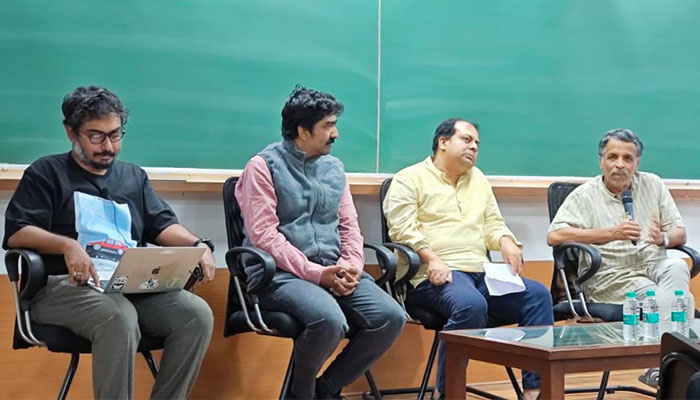
 Afternoon discussions transitioned to the fast-advancing frontier of AI governance. The panel on Tech Sovereignty, Universal Basic Income, Labour & Infrastructures brought together Prof. P J Narayanan, Anirban Dasgupta, and Srikanth Lakshmanan, Cashless Consumer. As global geopolitical tensions rise, the push for digital sovereignty is accelerating. Governments around the world are investing heavily in sovereign AI models, national data infrastructures, and the energy systems required to power them. Yet as these debates gain momentum, a critical question emerges: how do we ensure that the idea of tech sovereignty serves people—not just states or markets? As nations design the foundations of their digital futures, this is a pivotal moment to rethink sovereignty—not solely as state control, but as collective empowerment.
 November 2025