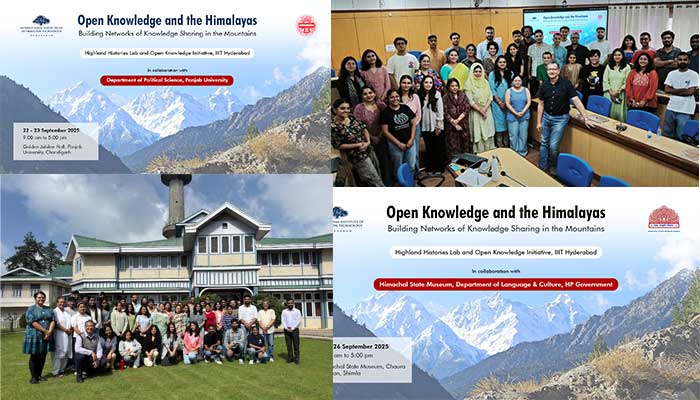
The Highland Histories Lab at the Human Sciences Research Centre, IIIT Hyderabad, in collaboration with Raj Reddy Centre for Technology and Society’s Open Knowledge Initiative (OKI), Wikimedia Foundation, and local partners, organised two path-breaking workshops in Chandigarh and Shimla in September 2025 to launch the idea of a Himalayan Open Knowledge Network.
The Himalayan region has long been studied and represented by outsider scholars, journalists, tourists, bureaucrats, etc. while the everyday voices of the people who live in the mountains have often been overshadowed and even ignored. These workshops marked the beginning of an effort to change that imbalance by empowering Himalayan residents to become knowledge creators themselves. Farmers, students, teachers, activists, homemakers, researchers, monks, nuns, and workers all carry rich lived experiences. The workshops aim to train them to use Wikimedia Commons and Wikipedia to share those experiences in durable, open-access forms.
The first workshop, held on 22–23 September at Panjab University, Chandigarh, brought together over 45 participants from Jammu and Kashmir, Ladakh, Himachal Pradesh, and Uttarakhand. Prof. Deepak Kumar Singh of the Department of Political Science welcomed the participants, and the sessions that followed introduced them to the ideas and practices of open knowledge. Hands-on exercises guided participants through uploading their own photographs, audio and video recordings, and editing Wikipedia articles. The excitement was palpable, as participants realised how quickly their contributions could become part of the world’s largest open knowledge platforms.
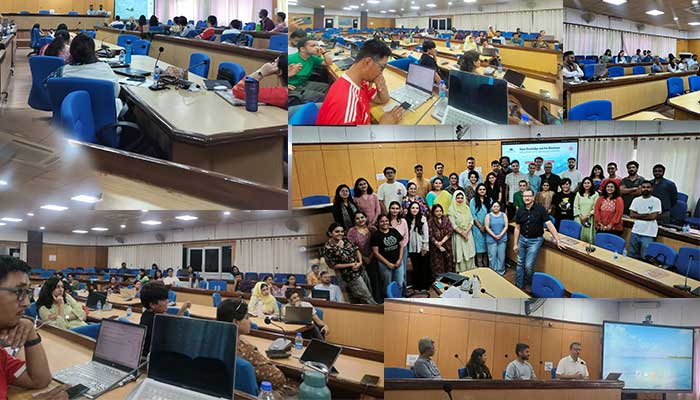 The second workshop, held on 25–26 September at the Himachal State Museum in Shimla, extended this engagement with a new set of participants. Director Dr. Hari Chauhan welcomed the gathering and offered to partner in building open repositories from the Museum’s own collections and projects. Here too, 45 participants worked in small groups, not only learning technical skills but also discussing the importance of community ownership of knowledge.
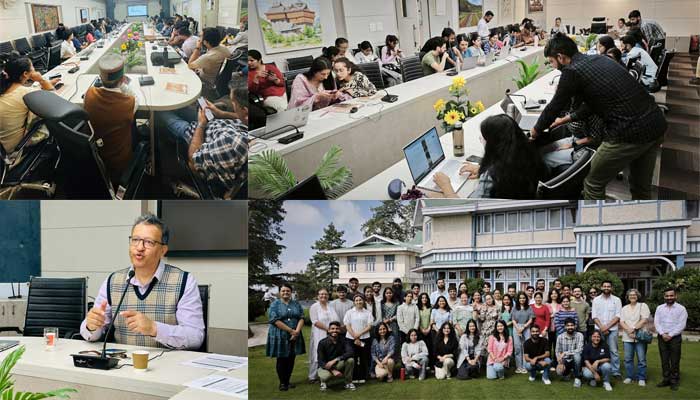
Across the two workshops, participants identified about a dozen potential projects under the emerging “Wiki Loves Himalayas” banner. These ranged from documenting local festivals and recording the architectural heritage to cultures of food, dress and marriage, and from ecological changes in mountain landscapes to the life stories of farmers and artisans. Small groups were formed to take these projects forward in a collaborative way.
Prof Aniket Alam from the Highland Histories Lab spoke about the need to build rhizomatic networks of knowledge creation that are non-hierarchical, sustainable, and rooted in local life. Nitesh Gill from OKI highlighted the importance of nurturing communities who see open knowledge not as a one-time project but as a long-term commitment and Satdeep Gill from the Wikimedia Foundation emphasised how Wikimedia projects already provide the world’s largest infrastructure for such work. Kuldeep and Satpal from the Punjabi Wikimedia community joined as resource persons. A key role in making both workshops successful was played by Aman Kant Panta, PhD student at HSRC’s Highland Histories Lab, who coordinated much of the planning and logistics.
Similar workshops are now planned in Uttarakhand in December this year. The initiative aims to overcome the digital divide in knowledge creation, curation, and consumption, and to grow into a larger Himalaya-wide effort. Its vision is ambitious: to weave together local knowledge with computational tools, to create a commons that is at once rooted in the mountains and accessible to anyone with the simplest of digital devices.
September 2025