Earlier this month, three interconnected workshops were organised by Dr. Aniket Alam, of HSRC’s Highland Histories Lab as part of a longer-term effort to rethink how knowledge about the Himalayas is produced, shared, and sustained. Taken together, these workshops explored new methodological, archival, and public knowledge practices aimed at building a knowledge network of and for the Himalayas — grounded in the lived experiences of mountain societies themselves.
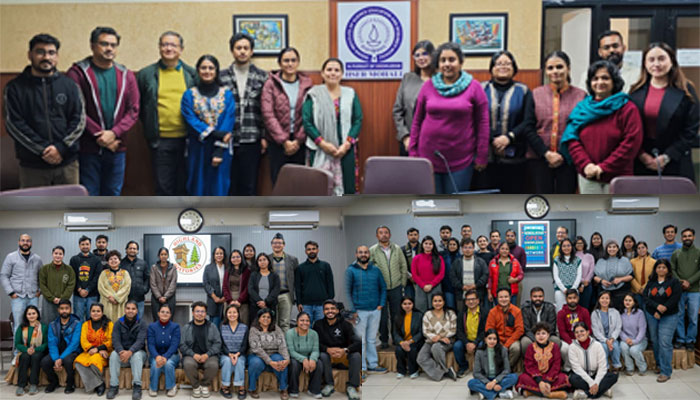
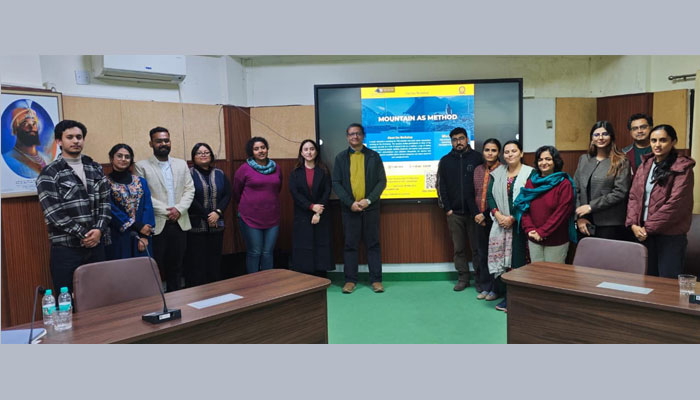
The first workshop, Mountain as Method, was held on 11 December at IISER Mohali in collaboration with Prof. Anu Sabhlok, Department of Humanities and Social Sciences. This one-day workshop brought together 11 young scholars working on mountain regions from various disciplinary and methodological perspectives. The workshop began from a simple but demanding premise: that mountain societies like the Himalayas, and highland Asia more broadly, cannot be adequately understood using concepts and categories developed primarily from the historical experience of plains societies. Participants engaged with questions of scale, temporality, ecology, mobility, and social organisation to explore how mountains produce distinctive rhythms of life and thought. Through lectures, discussions, and methodological exercises, the workshop foregrounded the need for concepts and methods that emerge from mountain lifeworlds rather than being imposed upon them. This was part of an ongoing attempt to develop Mountain as Method as a serious intellectual and comparative framework through collaborative work among Himalayan scholars.
 The second workshop, Open Knowledge and the Himalayas, was held on 15 and 16 December at the Doon Library and Research Centre in Dehradun. This was the third workshop under this theme, following earlier editions held in Chandigarh and Shimla in September. The series is being organised by the Highland Histories Lab at IIIT Hyderabad in collaboration with Nitesh Gill of IIIT’s Open Knowledge Initiative, and Satdeep Gill and Kuldeep Singh of the Wikimedia Foundation, with the aim of building a sustainable open knowledge network across Himalayan regions.
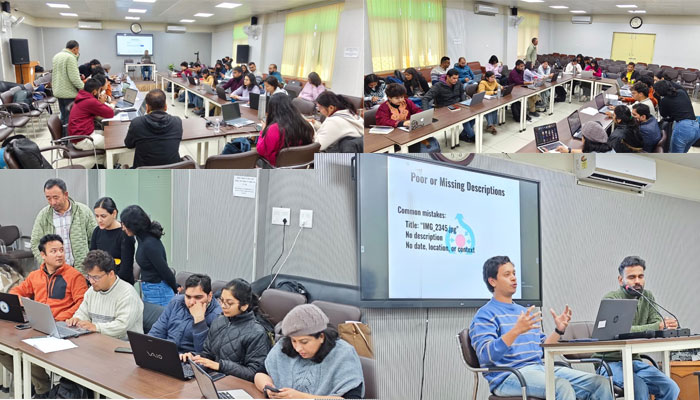 The Dehradun workshop brought together participants from Uttarakhand, Ladakh, and Himachal Pradesh, and built directly on the work initiated in Chandigarh and Shimla to create a community of open knowledge practitioners rooted in the mountains. A total of 38 participants attended, including students, researchers, teachers, journalists, activists, and both private and government employees who live and work in Himalayan regions.
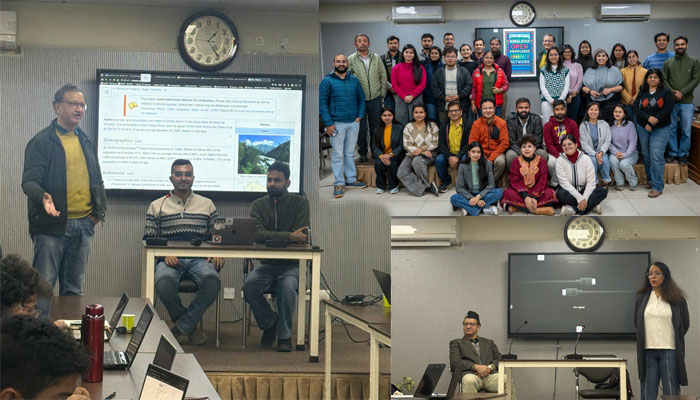 The workshop combined intensive, hands-on training with broader discussions on the politics and practices of knowledge creation. Participants learned how to contribute photographs, videos, audio recordings, and written material to Wikimedia Commons and Wikipedia, with an emphasis on documenting local histories, cultures, livelihoods, and environments. Alongside these practical sessions, the workshop engaged participants in reflecting on larger questions: who produces knowledge about the Himalayas, which voices become visible in public knowledge spaces, and how more inclusive and non-extractive forms of knowledge creation can be sustained over time.
The Himalayan Open Knowledge Network that is emerging from these workshops is being deliberately shaped as a frugal, non-hierarchical community, grounded in local experience rather than institutional authority, and oriented towards long-term collaboration and shared stewardship of knowledge.
The third workshop, held on 17 December at the same venue, focused on Oral Histories of Himalayan Transformation. Dr. Saurabh Todariya, Highland Histories Lab and Dr. Neekee Chaturvedi, Department of History, University of Rajasthan worked with Dr. Aniket Alam to conduct this intensive workshop of 25 participants. It brought together those who were interested in documenting the lifeworlds of older Himalayan residents through oral history recordings. The sessions covered the ethics, protocols, and practical challenges of oral history work, including consent, privacy, archiving, and long-term stewardship of recordings. Participants were introduced to the idea of oral history not simply as a technique, but as a way of understanding historical change through memory, everyday practices, family histories, religious life, work, and relationships with land, built and natural environment. The workshop laid the groundwork for a growing oral history archive that seeks to record forms of life and knowledge that are rapidly disappearing from the mountains.
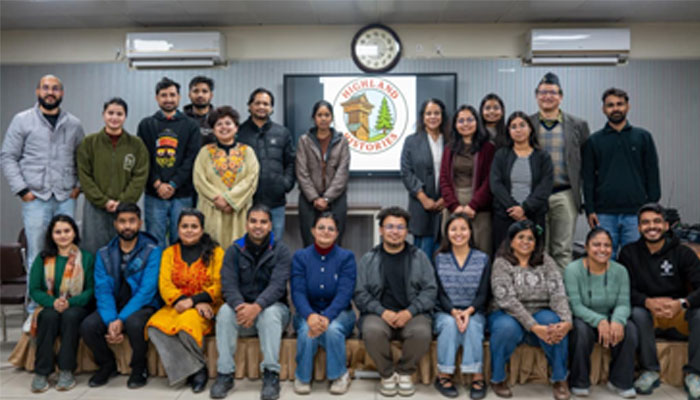 Together, these three workshops form part of a long-term effort anchored at the Highland Histories Lab to build intellectual, archival, and public knowledge infrastructures for the Himalayas, in collaboration with the Open Knowledge Initiative and the Wikimedia Foundation. By linking academic inquiry, open knowledge creation, and grounded oral history work, the initiative aims to enable Himalayan societies to document, interpret, and share their own pasts and futures in their own voices, and on their own terms.
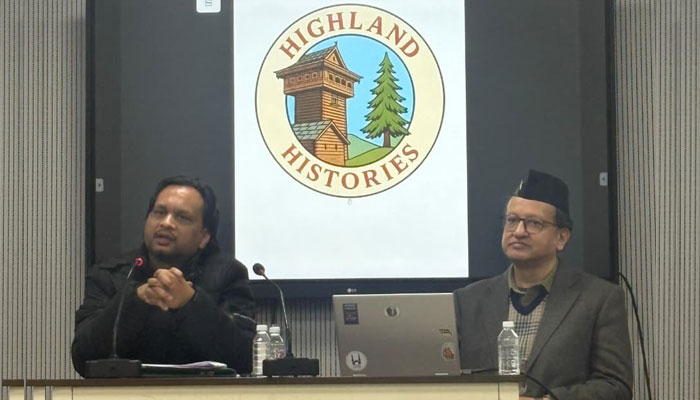 Further iterations of these workshops are planned in the coming months of 2026 in Sikkim, Ladakh, Himachal and Arunachal Pradesh.
December 2025