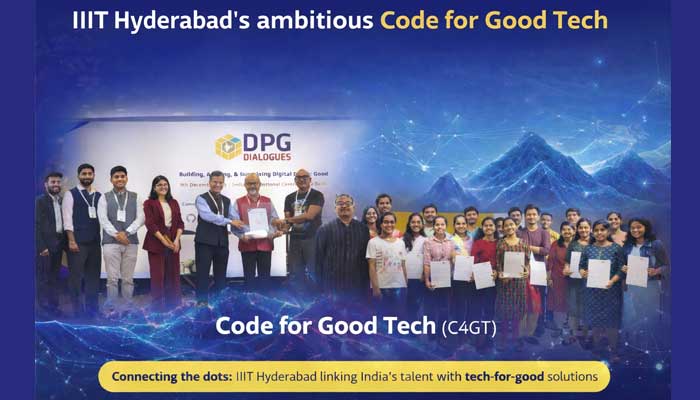
Code for Good Tech (C4GT) has found the sweet spot linking India’s vast talent pool of student developers and early-career professionals, with organizations building the next generation of Digital Public Goods (DPGs) and Tech-for-Good solutions. Think of that switchboard operator who can connect organizations in sustainable development, to students with the requisite tech-stack, to build products, overseen by research experts.
Connecting the dots
C4GT began its first avatar as Code for GovTech with Samagra, a Delhi-based, for-profit governance consulting firm. Piloted in 2022, with funding from Gates Foundation and Omidyar Network, the program emerged from a key insight that governments were over-reliant on private vendors for their technology solutions. Organizations building tech-for-good and Digital Public Goods (DPGs) were working in silos, unaware of each other’s efforts. Meanwhile there is a vast talent pool of budding developers across the country who could contribute to building these solutions in an economical & sustainable fashion, given the right opportunity and support.
C4GT was built to highlight opportunities in the tech-for-good and DPG product space. The ecosystem initiative bridges the gap by connecting the two critical stakeholders, tech-for-good organizations and budding developers, by creating structured pathways for building technology products for social good.
IIIT Hyderabad joined as a mentee institute. The 2022 pilot was a three-month summer internship, built on the lines of the Google Summer of Code, meant exclusively for projects and organizations working in the social impact domain. 13 student developers worked on 9 real-world DPG or tech-for-good products, under the mentorship of the product owning organisations.
The internship, aptly named the Dedicated Mentoring Program (DMP), has served as the annual flagship event for the C4GT program and has grown significantly, scaling to 103 projects with 87 mentors and 21 organizations taking part in 2023. By 2025, DMP had stabilized at 100+ projects from 40+ organizations, including 10+ global organizations, with over 70 successful project completions.
As C4GT grew, it needed a permanent institutional home. IIIT Hyderabad with its strong research & product building ecosystem, and its culture of contributing to social impact, was a natural fit. Recognising deep synergy in mission, the C4GT program transitioned to the Raj Reddy Center for Technology and Society (RCTS) at IIIT Hyderabad in early 2026. Post-transition, C4GT has added further layers, establishing a formal Advisory Council, Governance Council, and Partners Collective, comprising leaders from academia, government, industry, and the DPG ecosystem.

The backstory – Enabling a global social phenomenon
The Digital Public Goods Alliance (DPGA), a UN-endorsed multi-stakeholder initiative established in 2019, recognises and certifies Digital Public Goods and maintains the DPG Registry which is a curated, publicly accessible catalogue of verified DPGs, currently listing 237 products, 28 of which are of Indian origin.
Let’s break it down. Digital public goods (DPGs) are open-source software, data, AI models, and content that adhere to privacy and applicable best practices, do no harm by design, and help attain the UN Sustainable Development Goals. These DPGs act as building blocks for larger Digital Public Infrastructure (DPI), creating population-scale impact across health, finance, and identity systems. A compelling example is MOSIP, an open-source digital ID platform, now being used by the Philippines to build its national identity system and being considered by 27 countries across Asia, Africa, and Latin America.
But building and sustaining a Digital Public Good is no small feat. DPGs need a thriving contributor community to grow, evolve, and stay relevant. Without a steady pipeline of skilled talent, even the most promising DPGs risk stagnation. This is exactly where C4GT steps in, closing the loop by connecting DPGs and Tech-for-Good builder organizations with a continuous pipeline of qualified student engineers and early-career professionals.
Students gain real-world exposure working on solutions built for population-scale impact, while organisations get the technical talent they need to keep building.
“Since transitioning to RCTS, IIIT Hyderabad, we have retained its flagship Dedicated Mentoring Program (DMP) and added two new pathways. C4GT Hubs, a multi-year college engagement program targets Tier 2 & 3 engineering institutions and women’s colleges to build a sustained contributor pipeline. The Corporate Engagement program, enables tech professionals to dedicate work time to social impact projects. Together, these three pathways form the backbone of C4GT. The Code for Good Tech initiative is currently led by Prof. Ramesh Loganathan, alongside Dr. Arjun Rajasekar, Chief Technologist of RCTS, and supported by an in-house team,” says Ajitha Sindhe, who drives the programmatic operations & partnerships at C4GT.

C4GT Hub and Spokes. How it works
The C4GT Hub operates on a Hub and Spoke model with IIIT Hyderabad as the anchor hub and partner colleges as regional spokes. The multi-year initiative is designed to build a deep, sustained tech talent pipeline from Tier 2 and Tier 3 engineering institutions, with a focus on inclusive outreach to women’s colleges.
The Institute has conducted a longitudinal 3-year pilot of this model from 2023 with Kakinada Institute of Technology (KIET), skilling their students through IIIT-H programs, workshops, structured training in AI/ML, full-stack development, open-source practices, and real-world problem solving. To date, 250+ students have participated, resulting in 60 placements and 38 students selected for internships across various organizations this academic year. “We are currently in conversations with Bapatla Engineering College (Guntur), BVRIT Narsapur Women’s College, and PCCOE, Pune to expand the Hub network”, reports Ajitha.
Format for involvement of corporate entities
C4GT also engages the corporate tech ecosystem through C4GT Badal, their community-sourcing platform, that leverages the vast reservoir of corporate talent to build production-grade solutions for the social sector. Badal creates structured pathways for companies to contribute their engineers’ experience and time to ongoing Tech-for-Good projects housed at RCTS, transforming corporate social responsibility (CSR) intent into measurable technology impact.
IIIT-H piloted this model with Infosys’ employee teams who contributed to curated, modular problem tracks, aligned with their skills and the center’s social impact goals. Companies gain meaningful CSR outcomes and upskilled developers, while the ecosystem gains high-quality technical contributions that accelerate the development of social impact products at scale.
What’s in it for the student?
The Institute is currently scoping projects for DMP 2026 and have seen strong interest from DPG and Tech-for-Good builder organisation like PlanetRead, Mifos, MOSIP, Piramal Swasthya Management and Research Institute et al who have listed projects for this cohort.

Student applications open in April 2026. If you are a student, passionate about Tech-for-Good, this is your chance to contribute to real-world, population-scale projects, grow through a structured 1:1 mentorship model, and earn a ₹1 Lakh stipend while doing it. These are real products that C4GT developers like you have already contributed to and left their mark on. Follow us on LinkedIn and keep an eye on our website for updates and application details.
DPG SCoRe
Beyond programs, C4GT also contributes to the global knowledge commons. It co-authors the DPG State of the Community Report (SCoRe) in partnership with the Digital Public Goods Alliance (DPGA), an annual publication that tracks the state of the global DPG ecosystem, documenting community growth, contributor trends, and the evolving landscape of open-source social impact technology.
Since its inception in 2022 with 13 GovTech projects, C4GT has grown into a 30,000+ member community contributing to ~800 projects across 70+ organisations spanning Digital Public Goods, NGOs, and Tech-for-Good builders. Reflecting this natural evolution, the program was rebranded from Code for GovTech to Code for Good Tech, a name that better captures its expanding mission and broader focus on contributing to technologies for social impact.
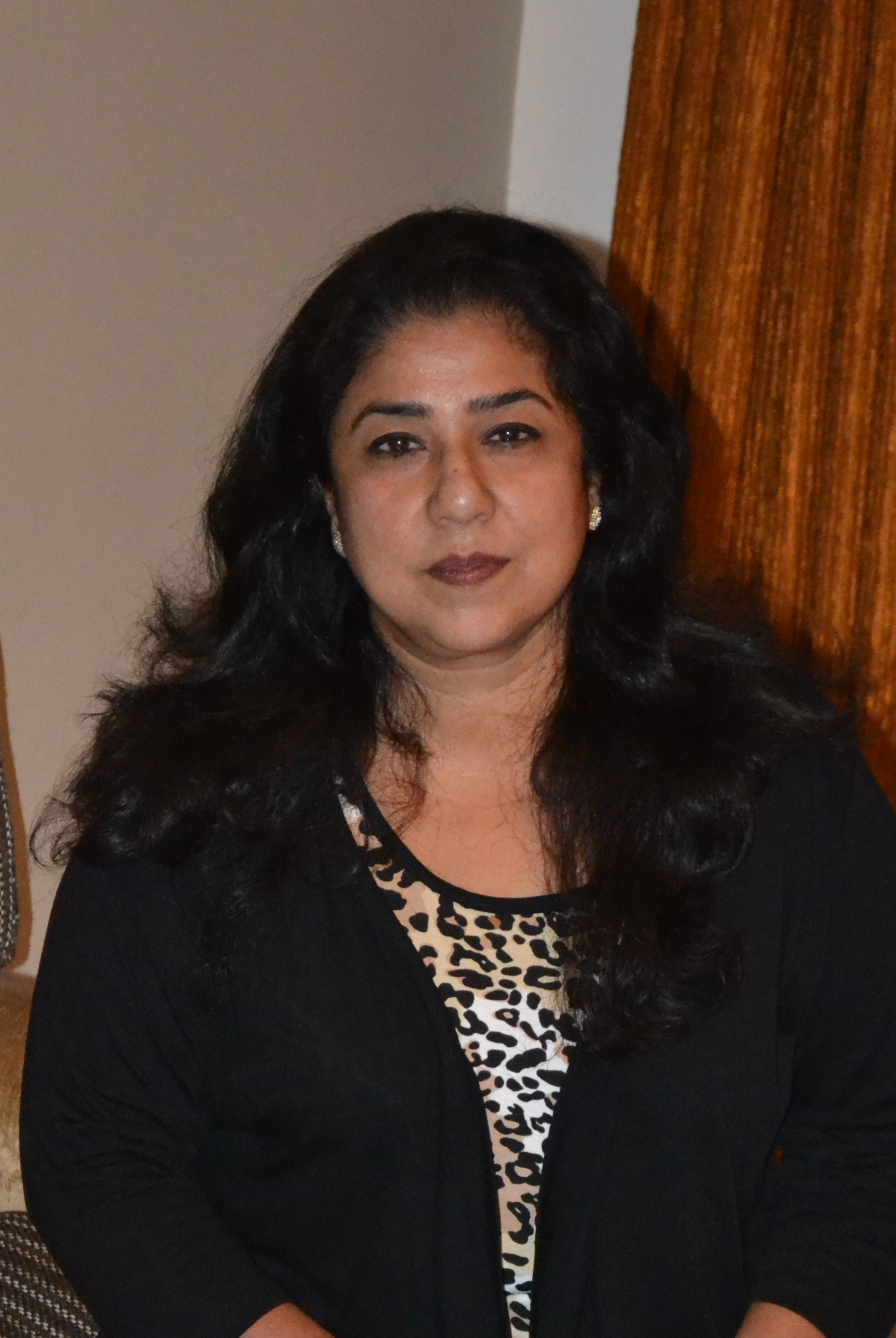
Deepa Shailendra is a freelance writer for interior design publications; an irreverent blogger, consultant editor and author of two coffee table books. A social entrepreneur who believes that we are the harbingers of the transformation and can bring the change to better our world.
Next post